
Ashton-under-Lyne, Greater Manchester
LMcW, CC BY-SA 4.0
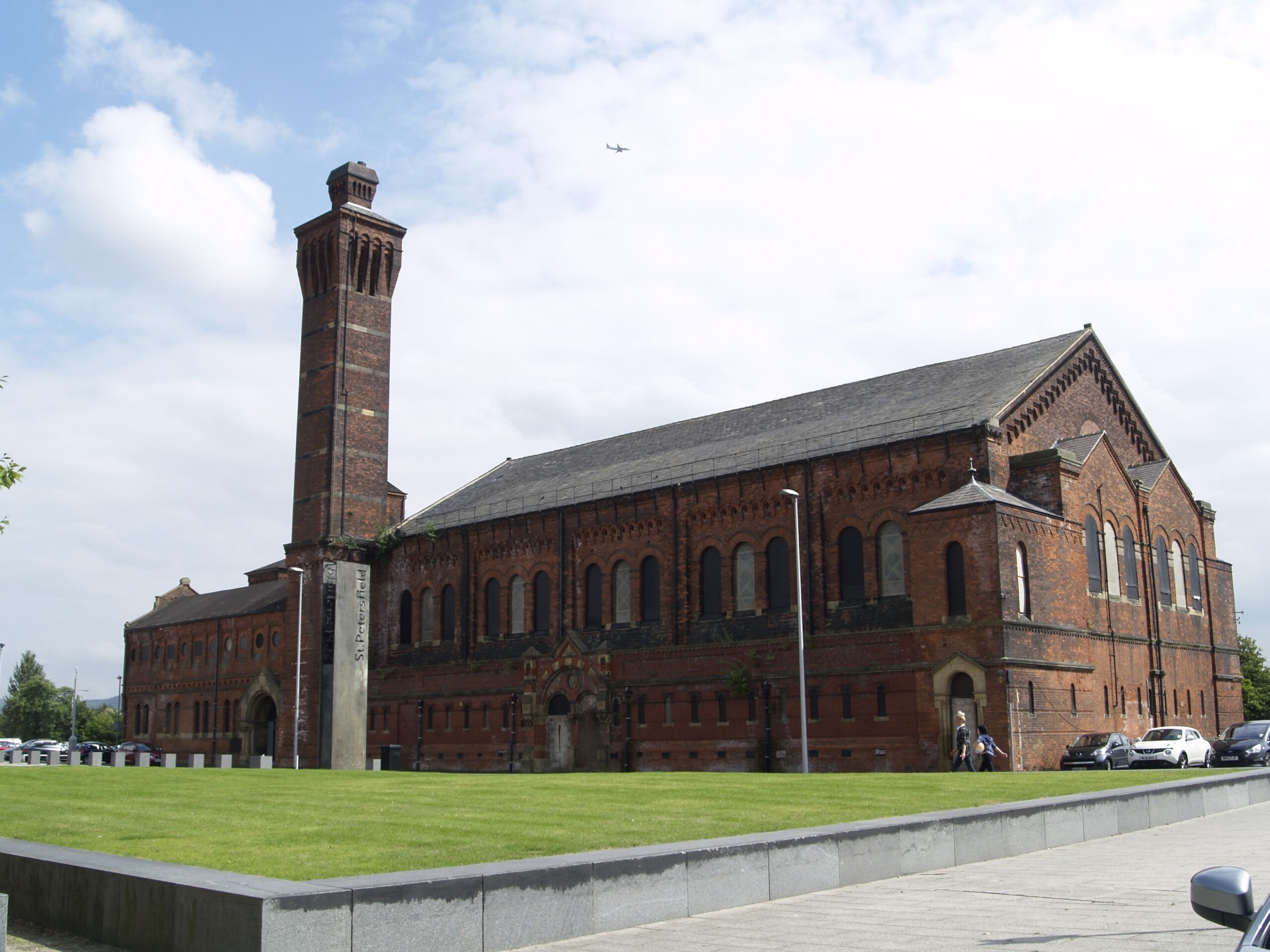
Grade II*-listed, 1870, Henry Paull and George Robinson
These former Municipal Baths were commissioned by the Ashton-under-Lyne Corporation in 1869, as part of the broader programme of works to improve sanitation and leisure provision in English industrial towns, set in motion by the Baths and Washhouses Act of 1846. An essay in Flemish bond brickwork, with a ventilation tower in the Lombardic Romanesque tradition, it was clearly intended as a local landmark, and is purported to have cost more than £16,000 to build.
At the time of its opening in 1870, the Municipal Baths were said to be the largest in Europe and incorporated a range of facilities, with the swimming pool anchoring the floor plan, and the projecting wings containing private bathrooms and a Turkish baths. In order to maximise its community value, the pool was covered with a wooden floor during the winter months, and converted for use as a skating rink, conference centre, or concert hall, and could accommodate some 4,000 people.
A water filtration system was added in 1915, bringing the baths up to modern standards, and the introduction of new heating and ventilation systems meant that it remained in use until 1975, at which point it formally closed. The building has moved between several private owners since then, and currently lies derelict, with the swimming pool filled with concrete, a salutary reminder of the difficulty of finding satisfactory uses for swimming bath buildings once they are allowed to close.
Status Update / March 2026
After a prolonged period of disuse, the building was restored and redeveloped as a co-working space in 2016. The developers adopted a ‘building within a building’ approach, erecting a self-contained steel and glass building inside the original pool hall to to provide office and meeting space for local creative businesses. This allowed original architectural features, such as the mock hammerbeam roof and arched brickwork to remain exposed and largely unaltered.