
Uncertainties surround Wolverhampton’s most unusual Baroque church
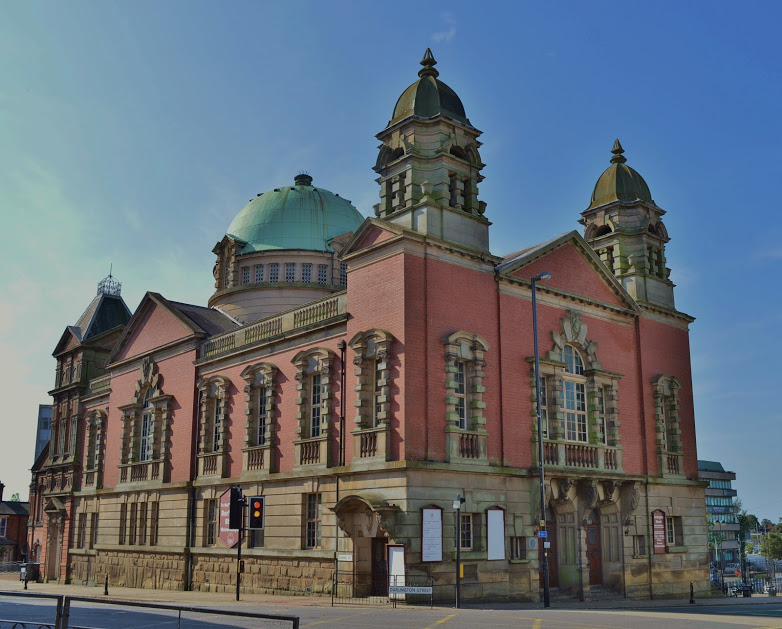
Grade II*-listed, 1900-01, Arthur Marshall
Darlington Street Methodist Church, which was built between 1900 and 1901, was designed by the noted architect of Methodist churches, Arthur Marshall, in an unusual interpretation of the Baroque, incorporating a large Venetian window and rusticated elements. Set at the centre of a conservation area, the church is a significant local landmark, with its copper dome and twin west towers visible from the surrounding streets. The interior is also significant, with features of note including vaulted ceilings with richly ornamented plasterwork, original gallery seating, and a well-preserved organ, designed by Nicholson & Co of Worcester. The church has since closed for worship, and though the basement, halls, and schoolrooms remained in use for other purposes, these also closed in 2019, leaving the building vacant. The condition is poor and deteriorating, with water ingress resulting in considerable damage to interior fixtures and fittings, and no progress has been made in the way of maintenance or repairs. A fire was recently reported in one of the halls, which indicates security provision at the site is also inadequate. If a new owner cannot be found to restore and redevelop the building, then this important piece of Wolverhampton’s heritage could be irretrievably lost.
Griff Rhys Jones, Victorian Society President, said: ‘To have such a wonderful building in such a state in the centre of Wolverhampton sends out a terrible message. Too often this leads to accusations of buildings becoming an eyesore. Surely a community can be found for this stunning building that has long served the people of Wolverhampton? The council should take enforcement action to prevent further deterioration.’
Status Update / March 2026
The restoration of the building was conceived by local resident, Rajinder Dhinsa, who regretted that it had fallen into disrepair. When he stepped inside for the first time, he was made aware of leaking roofs, unstable chimneystacks, and internal water damage, but he “said to [his] wife that it’s beautiful, it’s an absolutely beautiful building” and resolved to step in and restore it to its former appearance. The renovation included recreating historic plaster moulds, repairs to the columns, chimneys, and dome, and installing new bathrooms, wiring, and heating. It also involved adapting the building for use as an events venue, with new additions including an infinity dance floor and crystal chandeliers. Our West Midlands caseworker, Tim Bridges, reflects that ‘an outcome like this which brings hope of a sustainable future for a listed building is very rewarding’.