
Llanfyllin, Powys
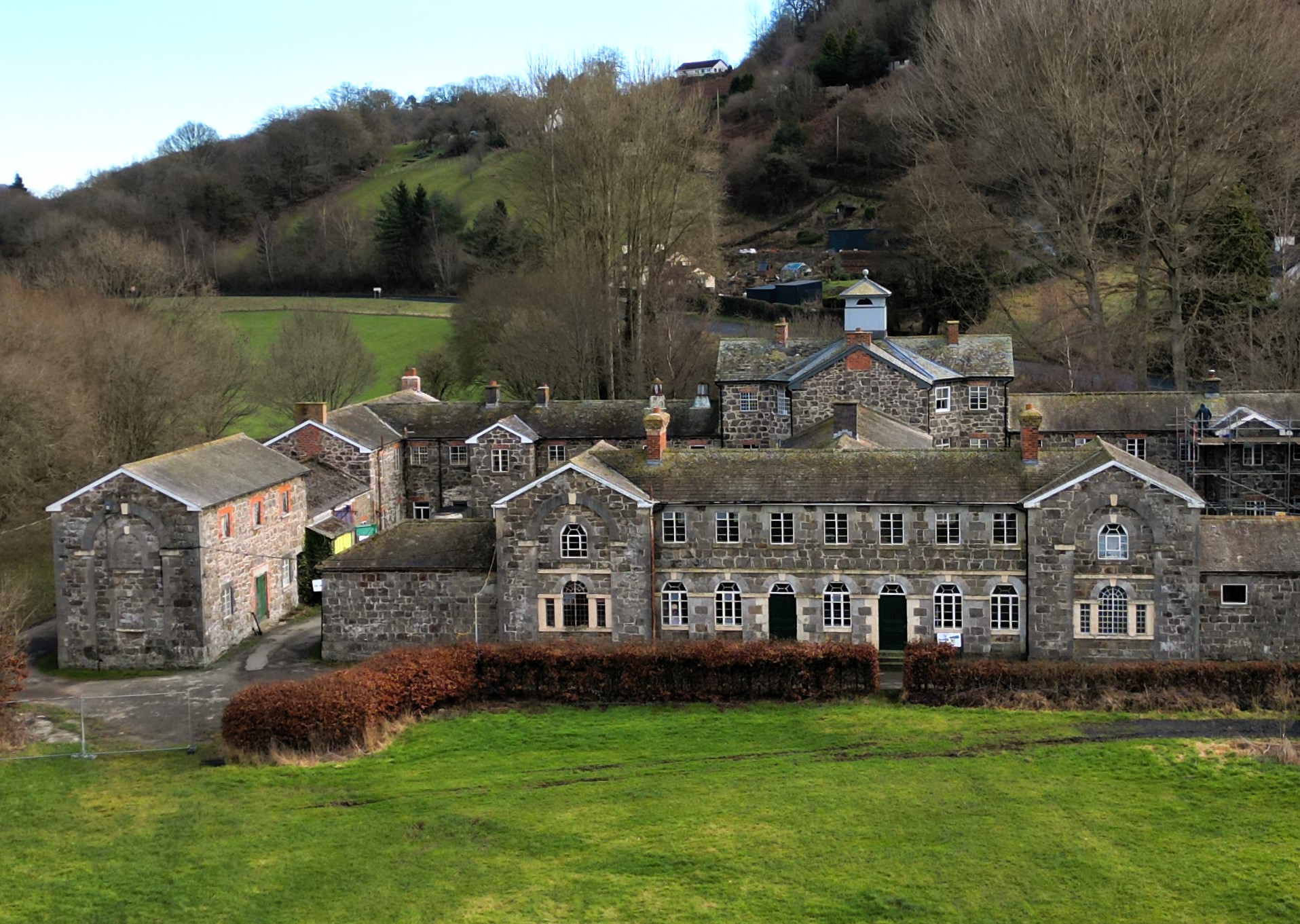
Llywelyn2000, CC BY-SA 4.0
Grade II*-listed, 1838, Thomas Penson
The former Llanfyllin Union Workhouse, known locally as ‘Y Dolydd’, was built by the Montgomeryshire County Surveyor, Thomas Penson, in 1838. An ambitious and well-executed work in the Classical tradition, the building is one of the most architecturally significant workhouses in Wales. It is also considered the finest surviving example of a workhouse built under the New Poor Law Act of 1834, and is noted for its expressive use of a plan form popular in workhouse building from 1834 onwards.
The complex was arranged across a cruciform plan, with four flanking wings enclosing segregated exercising yards radiating from a central octagonal section. This layout remains largely intact and, though the windows and doors have been updated, the exterior appears much as it did when it was built, with distinctive features such as Venetian windows, a square copula, and round-headed arches. Internally, the changes have been more substantial, but the original floor plan has been retained and the complex is noted for retaining two Victorian staircases and original details in the entrance lobby.
When the workhouse system was formally wound up in the 1930s, the workhouse buildings were converted for use as a residential home, and remained in that use until 1988, when they passed to the first of several private owners. At the time of writing, they lie vacant and in a poor state of repair, and despite making an appearance on BBC’s Restoration in 2004, a sustainable new use for the buildings is yet to be identified. The building has considerable potential, for redevelopment or as a heritage attraction in its own right, but future funding remains a serious problem and the Llanfyllin Dolydd Building Preservation Trust fear they may be forced to put the building on the market.
Status Update / March 2026
The workhouse was repaired with grant funding from the Welsh Government and the National Lottery Heritage Fund in 2021, and has now largely been restored to its former appearance. It reopened as a visitor attraction in 2018, operated by Cadw and the Llanfyllin Dolydd Building Preservation Trust, and is now considered the only preserved, publicly accessible workhouse in Wales.