
Operations ceased at the mill in 2006, and the complex of buildings is now derelict.
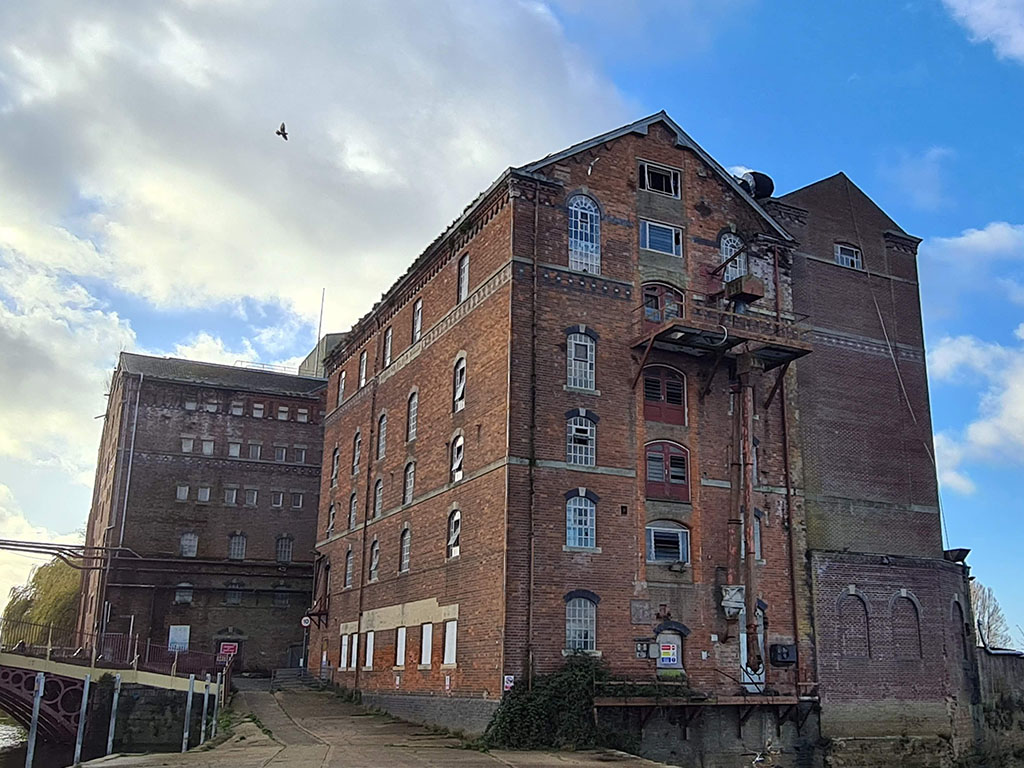
Grade II-listed, 1865-6, architect unknown
The former Healings Flour Mill was started in 1865 and when it opened in 1866 it was either the third or fourth flour mill to occupy the site, with the first recorded in the Domesday records of 1086. The buildings offer a comprehensive example of a large-scale flour milling operation from the nineteenth century, and are interesting in the local context, in that they demonstrate the historical importance of Tewkesbury as an agriculture centre. At its peak in 1892, Healings Flour Mill was considered the largest and most advanced flour mill in the country, capable of producing 25 sacks of flour an hour using the latest industrial machinery, but operations ceased in 2006 and the buildings are now derelict.
A number of later, twentieth-century buildings on the site were demolished following the closure of the mill. The machinery from the warehouse and mill was also removed, regardless of age, which has affected its historical significance. The listed buildings are considered unsafe and need serious structural work to preclude the possibility of demolition. Although plans were tabled in 2019 to demolish the non-listed structures around theVictorian mill, no formal application has been made. Likewise, a residential development plan from 2017 from a developer, has not yet come to fruition.
Griff Rhys Jones, Victorian Society President, said: ‘Healings Mill represents Tewkesbury and the surrounding area’s agricultural and industrial past and is a source of pride for many people who live around it. The mill’s riverside location and attractive architecture, make it ideal for repurposing to breathe new life into the area. Its grand scale gives it the potential to become a focal point for the community, with space for small businesses, homes, leisure facilities or even a museum. Sadly, its current state of extreme disrepair means that urgent action is needed to save this building from deteriorating further and facing total demolition. We hope a developer will see the potential in repurposing this wonderful building’.
Status Update / March 2026
The local council issued a press statement in 2025 in which they confirmed that plans for the site were being developed behind the scenes. The site remains in private ownership as of 2026 but it is expected that a transfer of ownership will take place later this year and that local authority funding will be deployed to create a riverfront attraction to attract visitors to the town. The leader of the council, Richard Stanley, is quoted in the media as saying that, whilst he can appreciate ‘there hasn’t been a change’ as yet, ‘there are changes afoot and there will be things in due course we can share’.