
This rare survival continues to deteriorate.
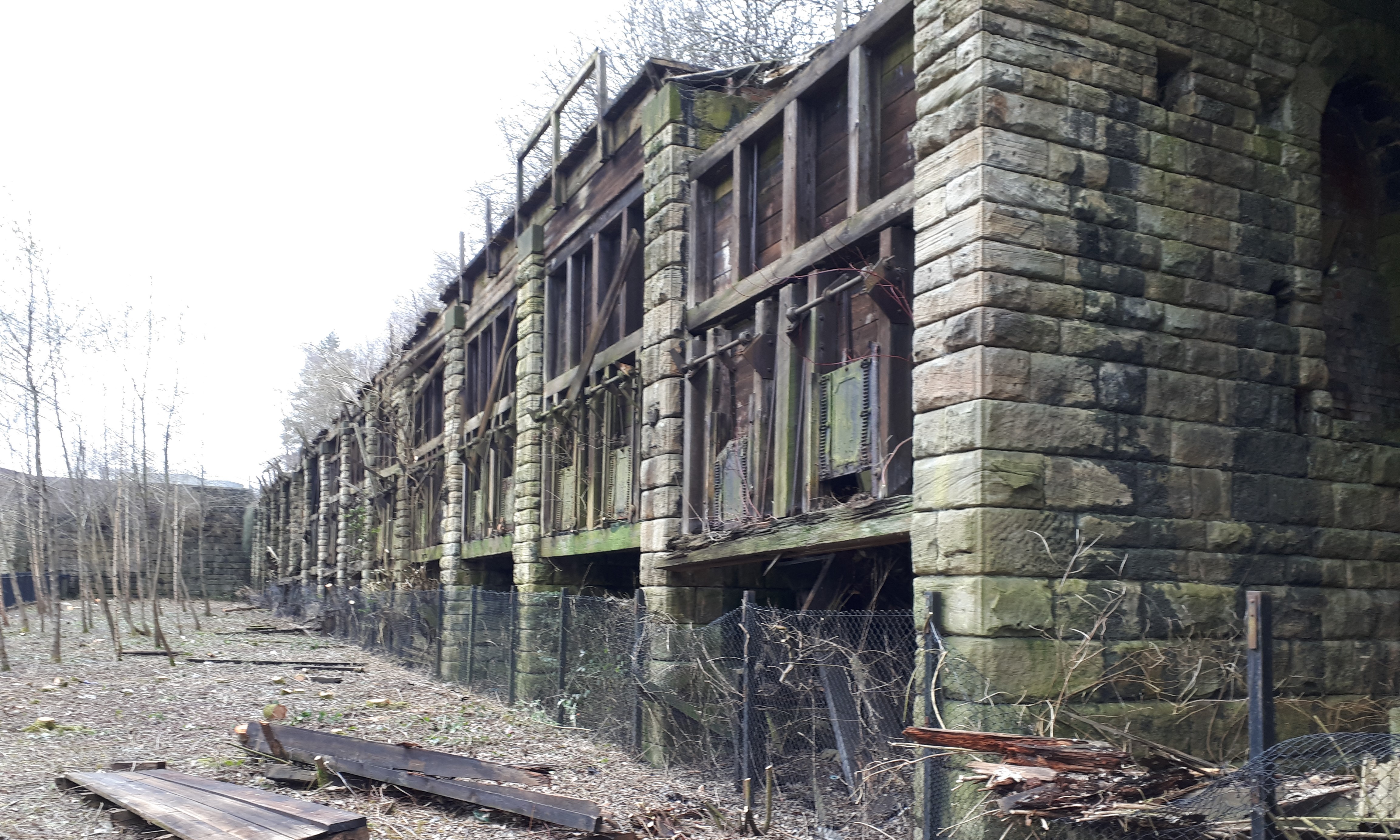
Grade II-listed, 1874, architect unknown
The Halifax Coal Drops, built for the Ovenden and Halifax Junction Railway in 1874, is a rare and large-scale survival of a building typology that was once widespread in Britain. The structure is comprised of fifteen wooden bunkers, built directly into the hillside, and an open shed immediately to the north, together with a sequence of walls and ancillary structures. Each of the bunkers has two metal doors which were raised and lowered on an iron ratchet geared pulley system and the process flow is still legible. At regular intervals, freight trains would stop on the tracks running across the structure and unload coal into the bunkers below, and then local traders would back theircarts into the bunkers to load their coal for distribution. Now owned by the local council, the structure has been fenced off to the public for more than fifteen years, partly due to the risk of masonry falling from the roof. They are now in a state of serious decline and without urgent attention could soon fall into irreparable ruin. A full structural survey is needed to establish the extent of the repairs.
Griff Rhys Jones, Victorian Society President, said: ‘Nowadays, we are moving away from fossil fuels, but the Halifax Coal Drops are a reminder of how long fossil fuels have been important to people’s lives and communities. Funding for an initial structural survey is urgently needed to understand exactly what is needed to save this unique piece of industrial heritage’.
Status Update / March 2026
Despite appearing on our list in 2021, the coal drops have continued to deteriorate, with weeds threatening the loss of another heritage-led regeneration opportunity. In 2022, Halifax Civic Society called upon the local council, who own the site, to incorporate it into a new pedestrian and cycle route linking the town centre to the Hebble Trail.