
Ancoats, Manchester
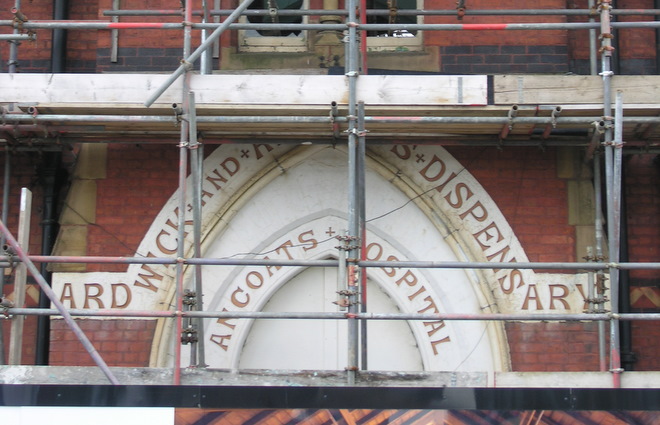
Grade II-listed, 1872, Daniel Lewis
The Grade II-listed Ancoats Dispensary on Old Mill Street was built in 1891 to treat patients who were ineligible for the poor law hospitals, but could still not afford medical bills. It is the only remaining building from Manchester’s nineteenth-century Ancoats Hospital, and is an impressive survivor in an area that has lost most of its historic buildings. It finally closed in 1996 and after years of neglect it appeared to have a saviour in the form of developer Urban Splash, a company credited with numerous successful regeneration schemes. However, earlier this year Urban Splash applied for Listed Building Consent to demolish the Dispensary, citing the withdrawal of a grant which would have funded repairs to the shell of the building as one of the reasons no solution could be found. The Victorian Society has urged Manchester City Council to refuse consent for demolition, arguing that the developer’s justification is flawed as it is limited to today’s poor economic outlook.
Ian Dungavell, Director of the The Victorian Society said ‘The Dispensary needs investment to be made safe and watertight until a new, long-term use can be found. There isn’t sufficient justification for demolishing this important Grade II-listed building and it must be given another chance. The Dispensary is not beyond repair and future generations won’t forgive us for allowing buildings like this to be lost due to short term economic concerns’.
Status Update / March 2026
This building had been left to gradually deteriorate after closing in 1989, and by 2015, scaffolding was holding up what remained of the existing structure. In 2024, however, it was given a new lease of life by the Great Places Housing Trust, who raised the funds necessary to complete essential remedial works and facilitate a change of use. The proposals were developed to keep and restore the historic façades to Old Mill Street and Lampwick Lane and to extend the building to the rear. A steel structure was used to hold the original elevations in place, and the central tower, which was previously removed from the site due to structural concerns, was substantially rebuilt. The building now comprises 39 one and two-bedroom apartments, all available for affordable rent.