
Grade II* church on the banks of the Dee with stunning interior and stained glass in process of closing while slowly deteriorating
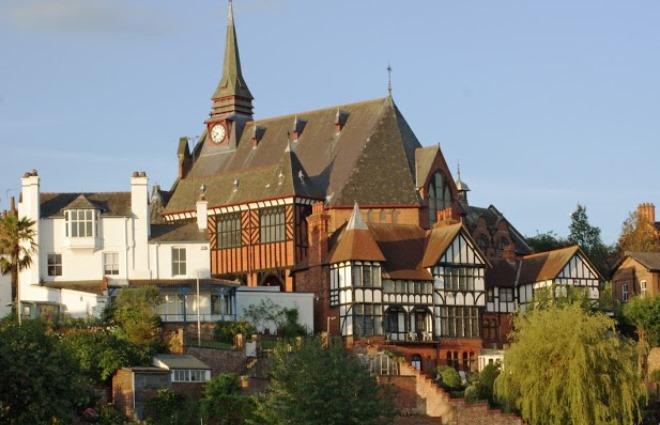
Photo Credit: Mal Vickers.
Grade II*-listed, 1876, extended 1902, John Douglas
From the outside, you would never know that St Paul’s Church, Boughton, incorporates an older classical church: John Douglas, the architect who designed much of Chester’s famous Victorian half-timbered town centre, was a congregation member, and when he was appointed to rebuild the church, he did so in his distinctive style and left little trace of what went before. Described in Pevsner as ‘the boldest of Douglas’s church designs’, the exterior is an elaborate mass of timber framing and stone-dressed brick with chamfered pinnacled buttresses and a cusped stone clock tower. The equally elaborate interior retains wall paintings and unusual stained glass windows by Kempe, Frampton, Morris, and Burne-Jones. It is a building of considerable architectural significance, and an important aspect of Chester’s broader architectural history, and deserves to be maintained. Yet, despite this, the church is currently going through the Church of England closure process as the congregation merges with another church, with a more ample supply of parking. The roof is in need of relatively minor repairs, and if these are left unresolved they could develop into more significant structural issues.
The Victorian Society Director, Christopher Costelloe, said: ‘I hope inclusion in the Top Ten will spur the congregation and Church of England to urgently set out plans for this building’s future and how it will be maintained until a new use is found. Urgent action should be taken to prevent further decay. Retaining historic buildings like those in the Top Ten is vital to maintaining local identity and creating places in which people want to invest, live and work’.
Status Update / March 2026
Ten years on, this unusual church remains on Historic England’s heritage at risk register and continues to decline. There is an ‘immediate risk of further rapid deterioration or loss of fabric’ and no remedial solution has been agreed. There are complexities linked to the sale of the building, including a covenant which requires a community use.