
Cardiff, South Wales
Ham II, CC BY-SA 4.0
Grade II-listed, 1859, R.G. Thomas
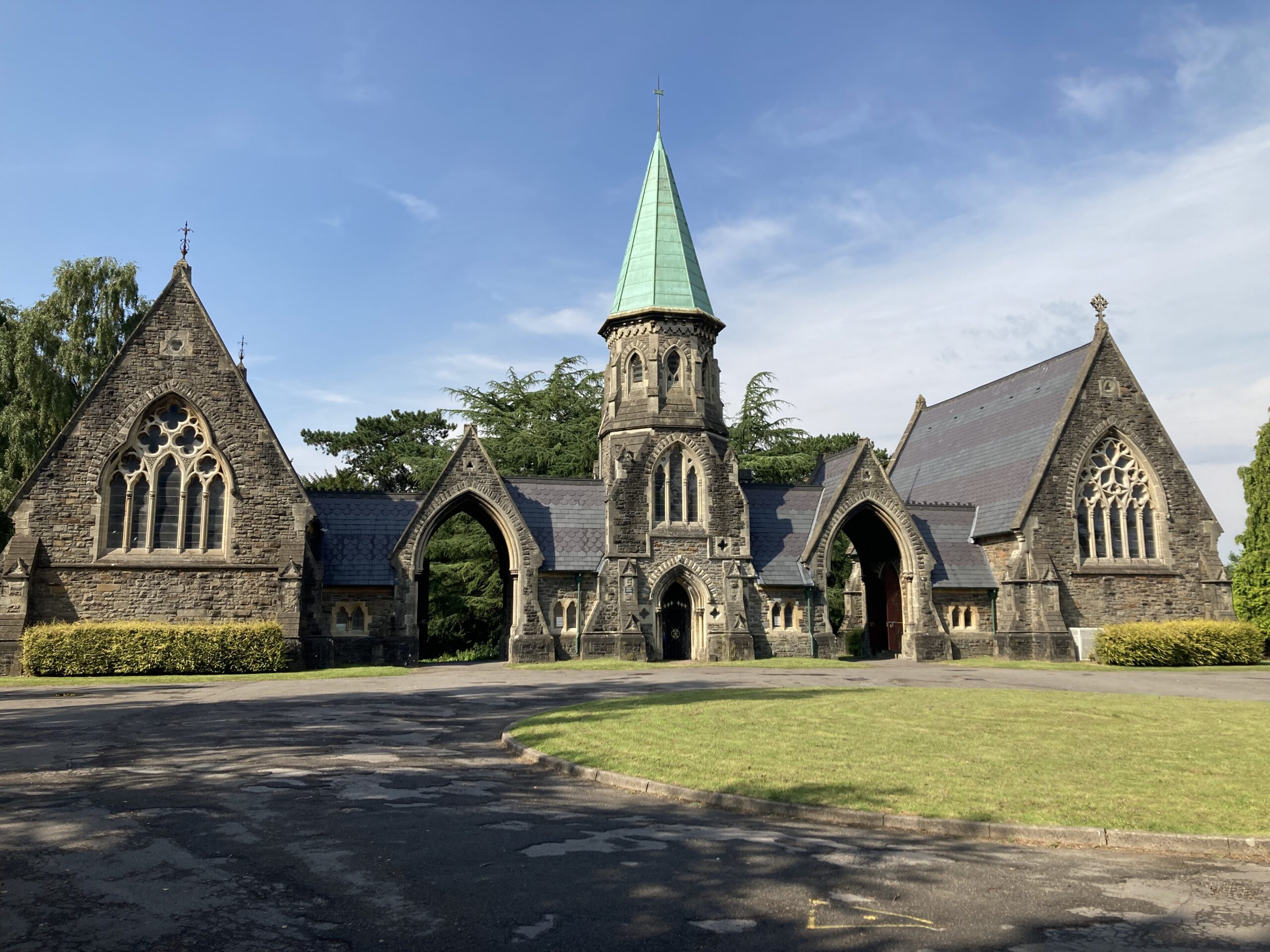
The chapels at Cardiff New Cemetery were constructed between 1857 and 1859, to plans developed by R.G. Thomas, in collaboration with the borough surveyor, T. Waring. As with the vast majority of nineteenth-century mortuary chapels, they were designed as a pair, with one for Anglicans and the other for dissenters, and considered in the context of a broader scheme of works. Each forms part of a five-stage symmetrical composition, and is connected with a central three-stage tower and spire via a system of lower links with covered ways. The ensemble is significant for its design coherence, with the individual structures benefitting from a structural, aesthetic, and functional group value.
At first glance, the two chapels appear identical, but whilst they are both works in Decorated Gothic – and there are similarities in the arrangement of their windows, buttresses, and doors – both internally and externally, the Church of England chapel is more ornate. There is reason to assume that Thomas aimed at a balance between repetition and differentiation in the visual arrangement of his chapels, ensuring each maintained a distinct personality, without compromising the symmetry of the whole. On a practical level, he clearly also considered potential applications of the superstructure for reinforcing the tower and spire or supporting specific use cases. The porte cochère – a feature commonplace in English cemeteries, but rare in Wales – was tall enough to accommodate a hearse, for instance, allowing mourners to pay their respects without concern for the inclement weather.
The chapels closed for services in 1992 and have been derelict ever since. Their condition is rapidly deteriorating, raising serious structural concerns, and though some good news came recently, in the shape of a £100,000 grant from the city council, a survey has since shown the condition of the building to be much worse than originally thought, whilst also revealing that they are inhabited by a colony of bats. The Cathays Cemetery Friends group is now urging the council to double its grant so that these fascinating records of Welsh religious history can receive the attention they deserve.
Status Update / March 2026
In one of the happier outcomes on our endangered buildings list, the twin chapels, bell tower, and links have all been restored to their former appearance. After being boarded up for decades, the tower now has clear windows and new gates, and funeral services are once again being held in the chapels. The work was made possible by a combination of donations, legacies, and grant funding from Cadw and the local council, and has been an unexpected commercial success. The venue is now popular for civil ceremonies and art exhibitions – and corporate uses are currently being discussed – demonstrating the potential for adapting derelict cemetery chapels across the country to new uses.