As the Society prepares for the 20th edition of our Top Ten Endangered Buildings list in 2027, we look back at some examples from previous Top Ten lists of Victorian and Edwardian buildings and structures that have found restoration and reuse.
London
Crocker’s Folly Public House – St. John’s Wood, City of Westminster – Top Ten 2007
Nominated for the Victorian Society’s Top Ten Endangered Buildings list in 2007. The Grade II*-listed Crown Hotel Pub, known after 1987 as Crocker’s Folly, was designed by local architect Charles Worley in 1896. The Public House was regarded as an elaborate example of Northern Renaissance style architecture. After closing in 2004, the condition of the building began to decline, leading to its nomination for the Victorian Society’s Top Ten Endangered Buildings list in 2007. In spring 2011, a planning application was submitted for the conversion of the upper floors to residential use. This was granted later that year, and works were undertaken to repair the building and adapt it to a new use. An application to restore the ground floor was approved in 2014, and it now operates as a popular Lebanese restaurant. The preservation of the original interior fittings, which feature over 50 varieties of marble, make this restoration particularly successful.
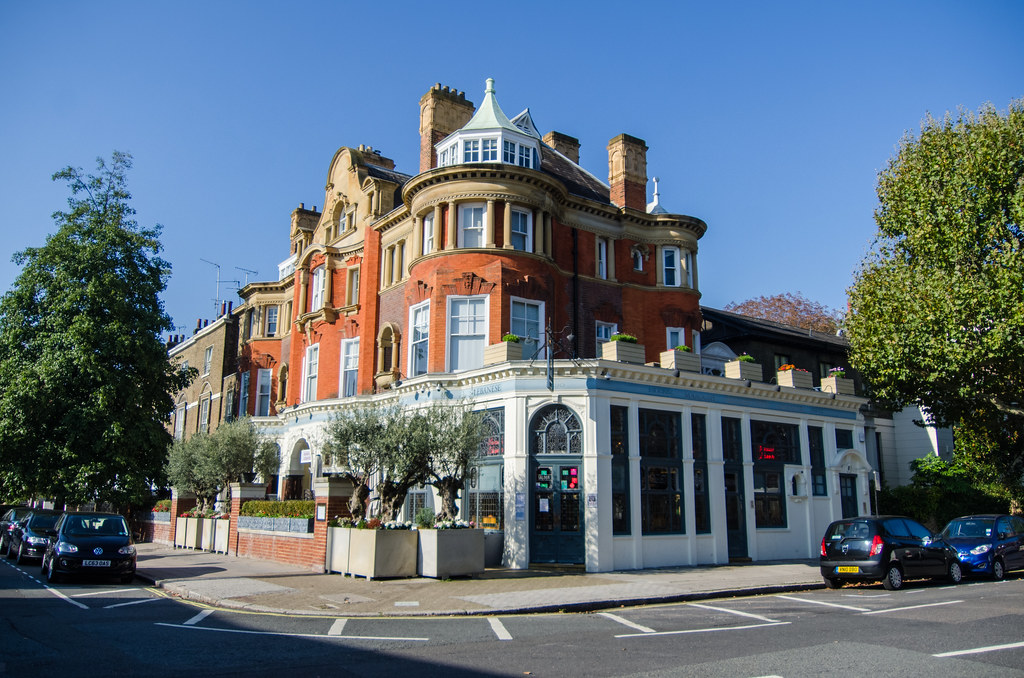
Crockers Folly. Photo: Arbron CC BY 2.0.
Abney Park Cemetery – Stoke Newington, Hackney – Top Ten 2014
Designed in 1840 by Architect William Hosking in the early dissenting English Gothic style, the Grade II-listed Chapel in Abney Park Cemetery was nominated for the Victorian Society’s Top Ten Endangered Buildings list in 2014. Abney Park was a significant burial ground for dissenters and non-conformists, and the non-denominational chapel at its centre was intended to accommodate all religious beliefs. By the 1960s, both the chapel and the cemetery began to fall into disrepair after burial space had run out. The cemetery chapel was becoming overgrown and at risk from vandalism. In 2015, Hackney Council resumed management of the site in conjunction with the Abney Park Trust. After receiving funding from Hackney Council and the National Lottery Heritage Fund, a major restoration project was completed in 2024. In addition to receiving practical structural repairs, the chapel was restored as a community events venue, which included the addition of new seating at mezzanine level, accessible toilet facilities, mains electricity, and atmospheric lighting. The restoration has been very successful, and the chapel is now a popular location for weddings and other events. This is a positive demonstration of what can be accomplished with cemetery chapels, especially as so many across England and Wales remain derelict.
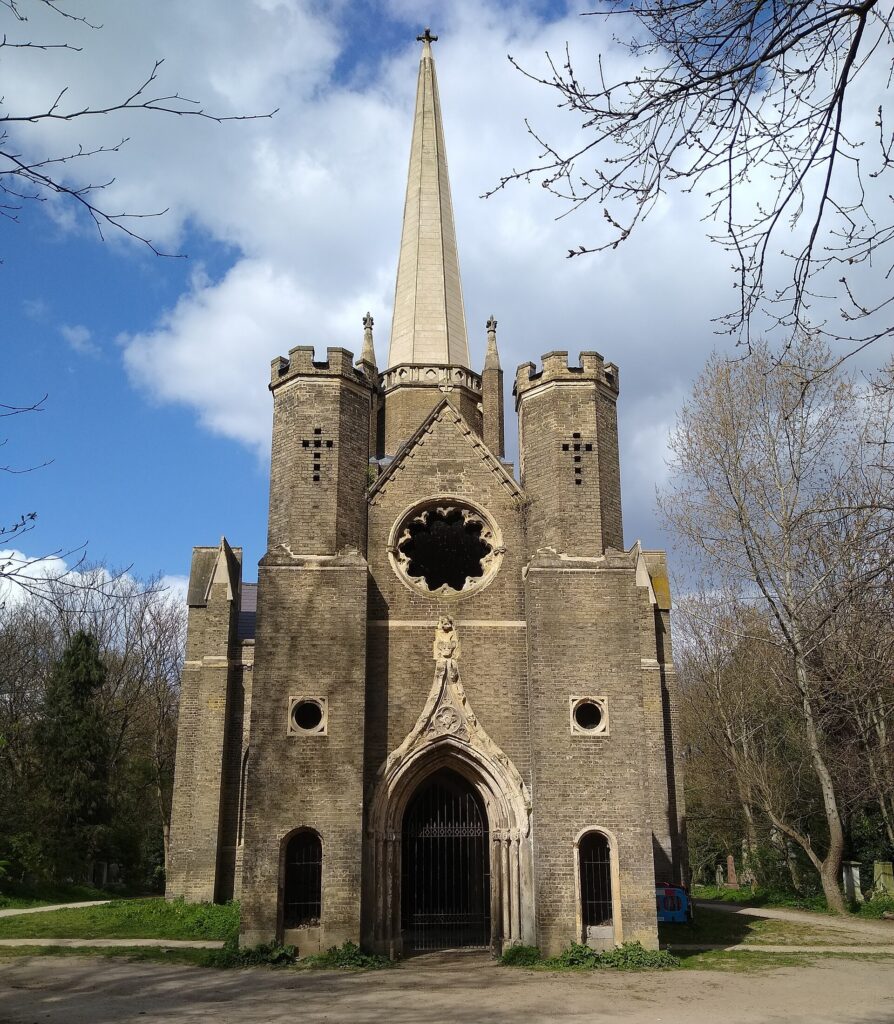
Abney Park Cemetery Chapel Photo: Hackney Venues
East Midlands
Wingfield Railway Station – Derbyshire – Top Ten 2012
Wingfield Station was designed by Francis Thompson for the North Midland Railway in 1839-40. Considered to be one of the best-preserved train lines demonstrating the development of the early rural railway, the station is a Grade II*-listed building. Since passing into private ownership during the 1960s, the station had been left to deteriorate, and in 2012 it was nominated for the Victorian Society’s Top Ten Endangered Buildings list. In 2019, the local authority completed a compulsory purchase of the station building, with support from Derbyshire Historic Buildings Trust and Historic England. A variety of funding was secured for the completion of the works. By 2023 the station had been successfully restored to its 1840 appearance, and now operates as a tearoom and heritage centre, complete with a model railway and views of the Midland mainline.
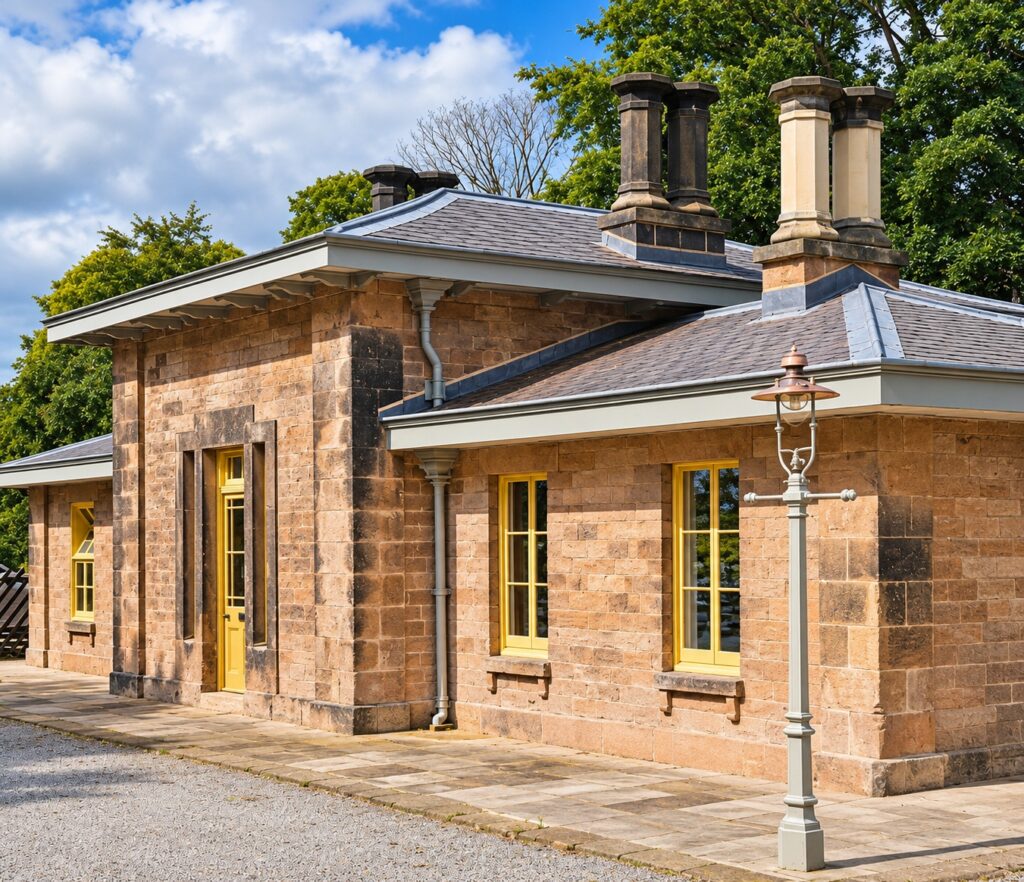
Wingfield Station Facade. Photo: Wingfield Station 1947.
West Midlands
Fenton Town Hall – Stoke-on-Trent – Top Ten 2013
Nominated for the Victorian Society’s Top Ten Endangered Buildings list in 2013, Fenton Town Hall was built in 1888. Originally for the local council, the unlisted building was later used as a court house and remained the seat of the magistrates’ court until 2012. Following a grant from Arts Council England in 2020, works were undertaken to restore and reopen the building as a community arts venue. The first phase of works saw the restoration and repair of the 3,5000 square foot ballroom, which is once again being used as a centre for dance and drama, as well as the installation of a new café and shop in the foyer. A second phase, supported by the city council and the Severn Trent Community Fund, focused on bringing the building up to modern sustainability and accessibility standards, which involved installing ramps, a lift, and an air-source heat pump. The scale and situation of the town hall has enabled a variety of uses, and other parts of the building are set aside for commercial use as office, studio, and exhibition spaces.
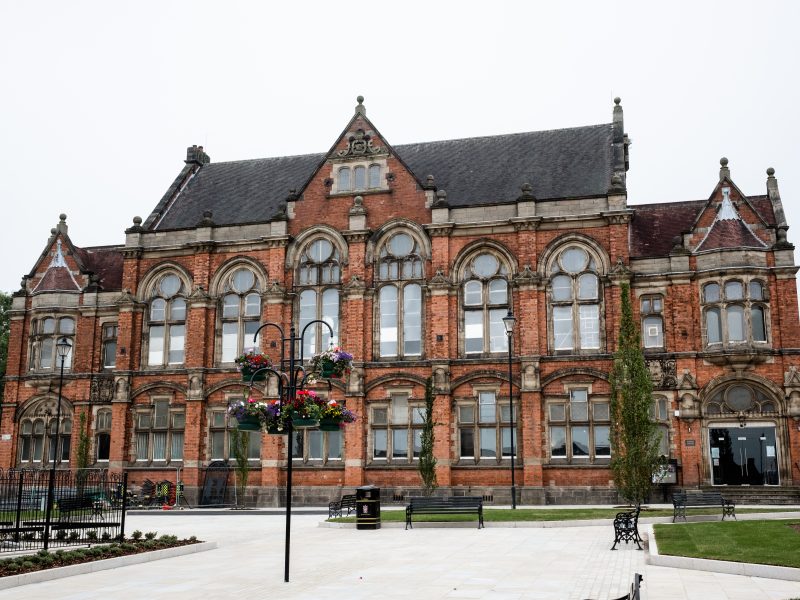
Fenton Town Hall. Photo: Restoke /Jenny Harper
Moseley School of Art – Birmingham – Top Ten 2010
Nominated for the Victorian Society’s Top Ten Endangered Buildings list in 2010, the former Moseley School of Art is a Grade II*-listed building located in Birmingham. Dated to 1898, the school was designed by Arts and Crafts architect W.H.Bidlake in the ‘Wrenaissance’ style. After the closure of the art school in 1975, the building passed into the ownership of the British Association of Muslims but continued to deteriorate. Shortly after appearing on the Society’s list, in 2010, a National Lottery grant was obtained to help produce a strategy for the building’s sustainable reuse. In 2018, a full National Lottery Heritage Fund grant enabled its complete restoration and adaptive reuse as the new Moseley Community Hub, which incorporates co-working spaces, a conference centre, and flexible gallery and exhibition spaces, adapted to show artworks and artefacts that are accessible to all members of the community. Every effort was made to conserve its significant Bidlake fabric and to repair or re-interpret deteriorating features including the original entrance hall, the ceramic tiles, and the imposing Moseley Road façade.
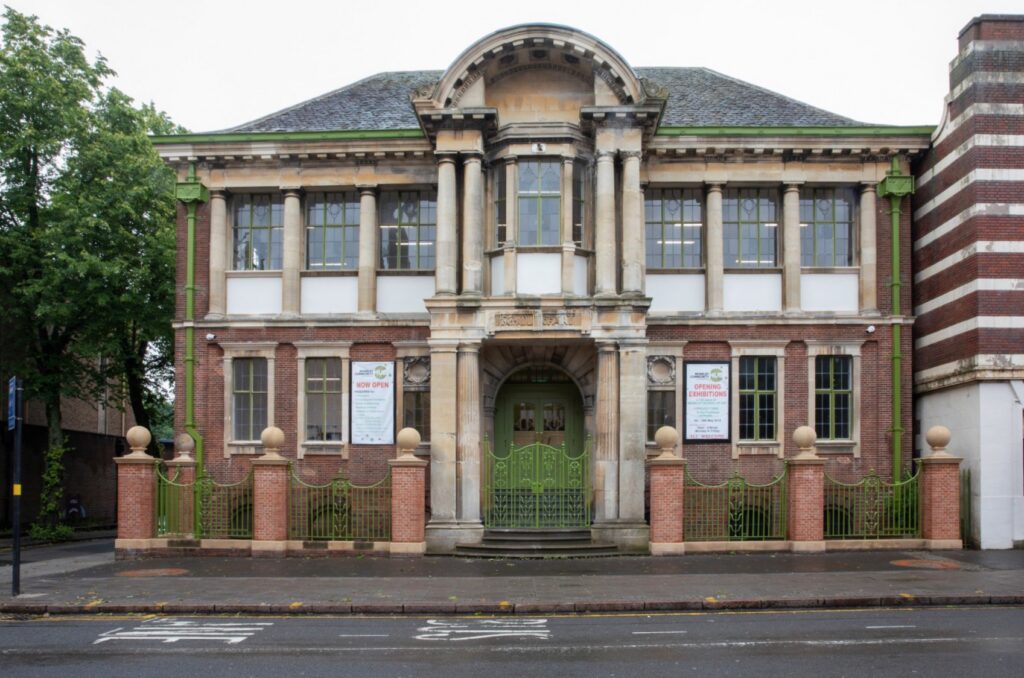
Moseley School of Art. Photo: BPA Architects
North West
Former Ancoats Dispensary – Manchester – Top Ten 2011
Nominated for the Victorian Society’s Top Ten Endangered Buildings list in 2011, the Ancoats Dispensary was built in 1872, and is only surviving component of the 19th century Ancoats Hospital. Grade II-listed, the dispensary was built to treat patients who were ineligible for the Poor Law hospitals but could still not afford medical bills. This building had been left to gradually deteriorate after closing in 1989, and by 2015, scaffolding was holding up what remained of the existing structure. In 2024, however, it was given a new lease of life by the Great Places Housing Trust, who raised the funds necessary to complete essential remedial works and facilitate a change of use. The proposals were developed to keep and restore the historic façades to Old Mill Street and Lampwick Lane and to extend the building to the rear. The building now comprises 39 one and two-bedroom apartments, all available for affordable rent.
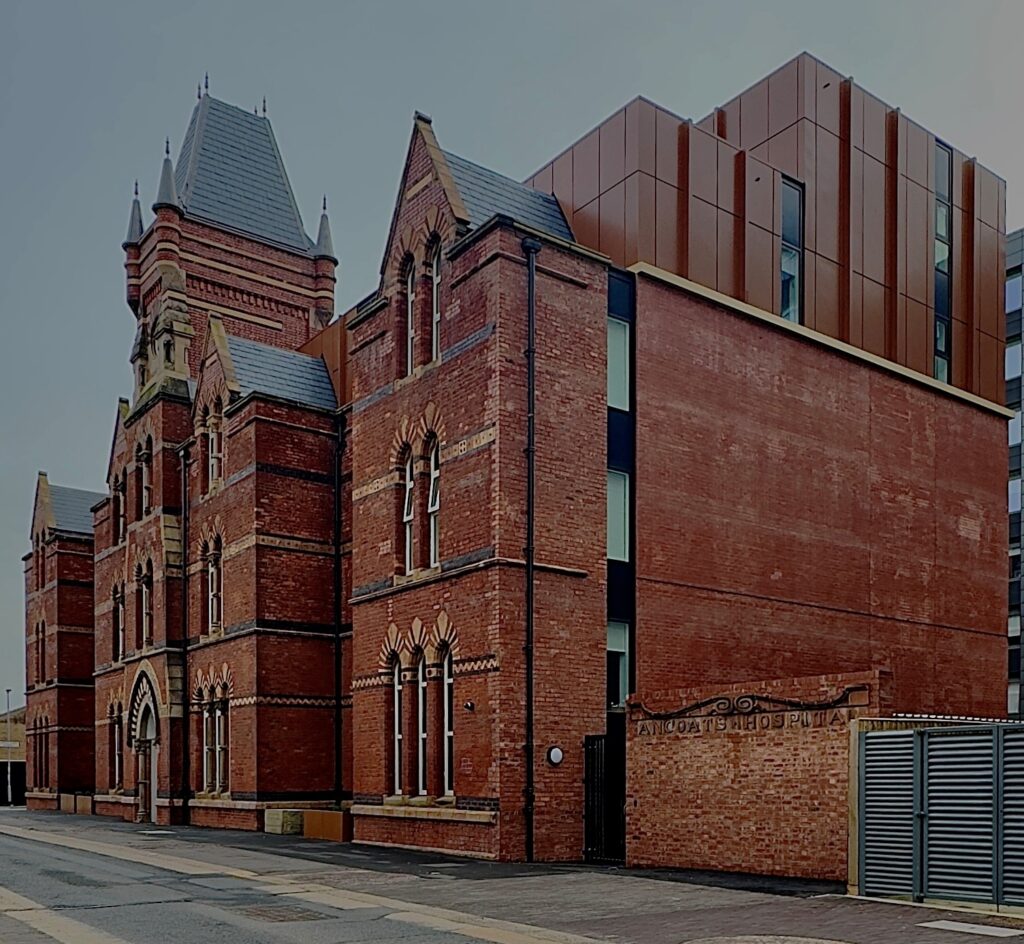
Ancoats Dispensary. Photo: Patricia Smith
Gustav Adolfs Kyrka – Liverpool – Top Ten 2007
The Gustaf Adolf Seamen’s Church was built on behalf of the Church of Sweden in 1884 to serve the growing community of Swedish sailors and immigrants in Liverpool. The Grade II-listed church was nominated for the Victorian Society’s Top Ten Endangered Buildings list in 2008, after it was announced that the Church of Sweden intended to leave Liverpool, which would have left the building without a use. When the Church of Sweden made the Liverpool International Nordic Community aware of their intention to sell the building, volunteers informed them that there were specific details set down in the 1883 indenture which prevented a sale. The Trust communicated with English Heritage and had the building’s listing increased to Grade II* in 2009, which meant that any further changes required formal approval. Accordingly, a decision was made to retain the church, with management, maintenance, and operational responsibilities transferred to the Trust. The church congregation became a separate body in 2013, which enabled them to join the more established Lutheran Church of Great Britain, and keep the building in regular use.
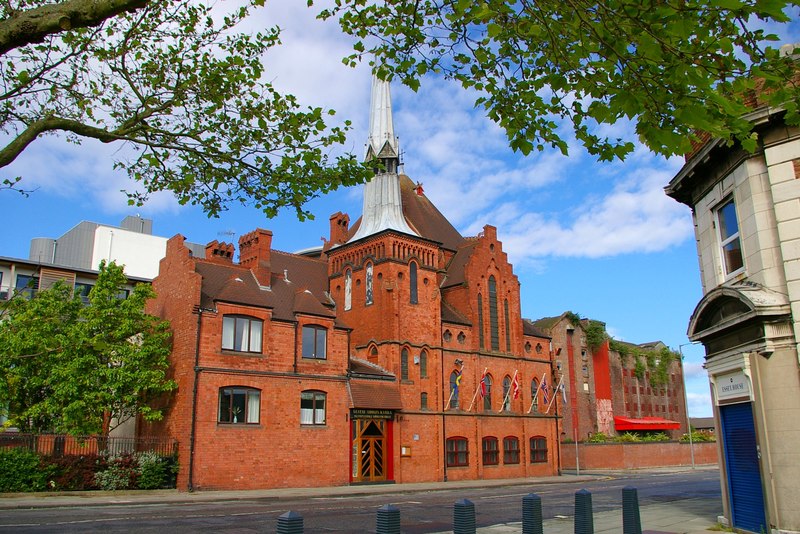
Gustav Adolfs Kyrka, Liverpool. Photo: Tiger CC BY-SA 2.0.
Wales
Cathays Cemetery Chapels – Cardiff – Top Ten 2008
Nominated for the Victorian Society’s Top Ten Endangered Buildings list in 2008, the Cathays Cemetery chapels were completed in 1859, and remain a striking example of the Victorian Gothic style in Wales. The twin mortuary chapels were designed to accommodate services for both Anglicans and dissenters. The Grade II-listed chapels are connected by a central tower, accessible via a covered link. After the chapels ceased to provide services in 1992, they became derelict and rapidly deteriorated. Fortunately, the twin chapels, bell tower, and links have all been restored to their former appearance. After being boarded up for decades, the tower now has clear windows and new gates, and funeral services are once again being held in the chapels. The work was made possible by a combination of donations, legacies, and grant funding from Cadw and the local council, and has been an unexpected commercial success. The venue is now popular for civil ceremonies and art exhibitions, demonstrating the potential for adapting derelict cemetery chapels across the United Kingdom to new uses.
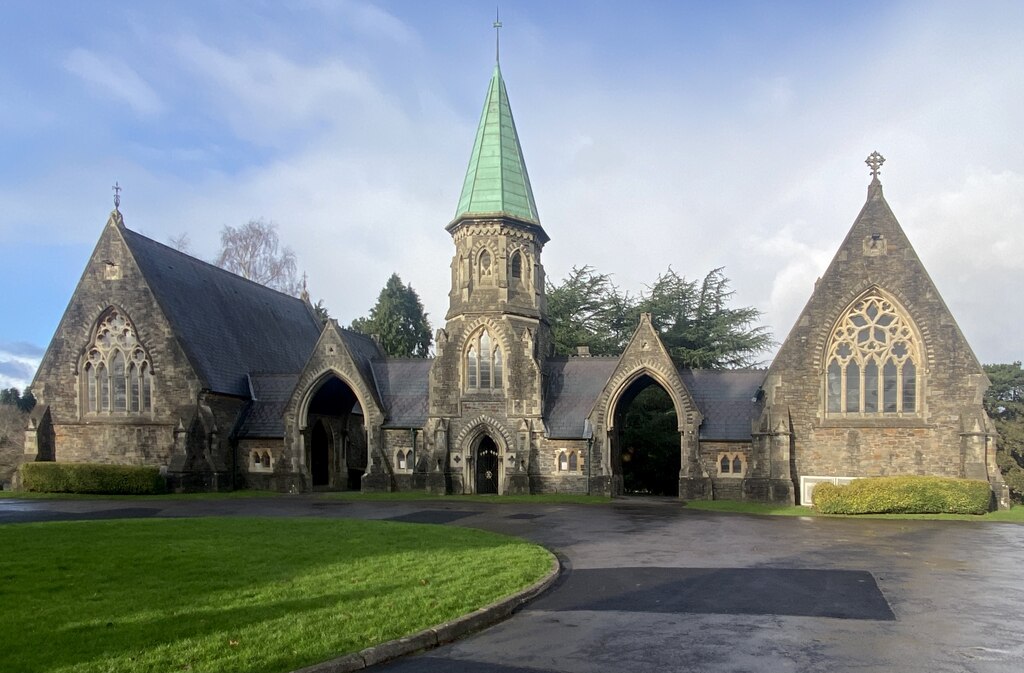
Cathays Cemetery Chapels, Cardiff. Photo: Alan Hughes CC by SA 2.0
Plas Alltran – Anglesey – Top Ten 2020
Grade II-listed Plas Alltran is a former doctor’s house and surgery built between 1890 and 1891 as part of a larger project to redevelop the neighbourhood of Blackbridge in Holyhead. It is thought to have been commissioned by Jane Henrietta Adeane, a noted local philanthropist, to improve healthcare provision in the area, and remained in its original use until 1900, when the doctor died. The building lay vacant from the 1970s and was purchased by the Council after the Top Ten Endangered Buildings announcement, and is now restored and converted for use as social housing. With north-west based conservation specialists Recclesia having worked hard on its restoration, it now offers four homes. The building was converted into four low-carbon, one-bedroom apartments in 2023 as part of an affordable housing scheme. As part of the works, the original external walls and slate tiles were retained and any features lost or damaged, such as door mouldings and stair spindles, were recorded and replicated in accordance with Cadw guidance. Minimising environment impact was an important consideration for the developer, with insulating lime plaster and an MAVHR system used to maximise heat retention.
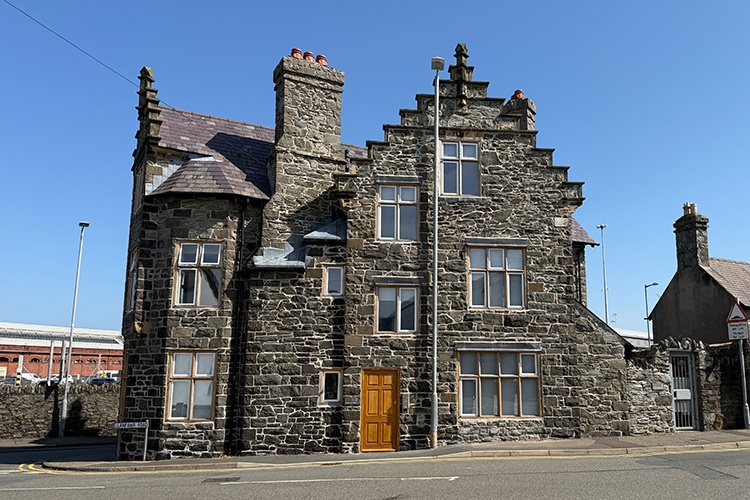
Plas Alltran after restoration. Photo: Isle of Anglesey Council.
Yorkshire
Red Barns House – Redcar – Top Ten 2016
Nominated for the Victorian Society’s Top Ten Endangered Buildings list in 2016, Red Barns House is a Grade II*-listed residential building located in Redcar on the Yorkshire Coast. Dated to 1868, the house was designed by leading arts and crafts architect Phillip Webb in the Georgian vernacular revival style. After being the private home of Gertrude Bell CBE, a pioneering Victorian explorer of the Middle East, the building passed through a number of alternate uses but was at risk due to neglect and water damage. Fortunately, Red Barns has been restored by husband-and-wife team Jackie and Jon Dale and turned to use as a five-bedroom guesthouse. The property had further deteriorated by the time the couple bought it in 2018, but thanks to the Dales’ efforts it has been removed from Historic England’s heritage at risk register and is in a good condition.
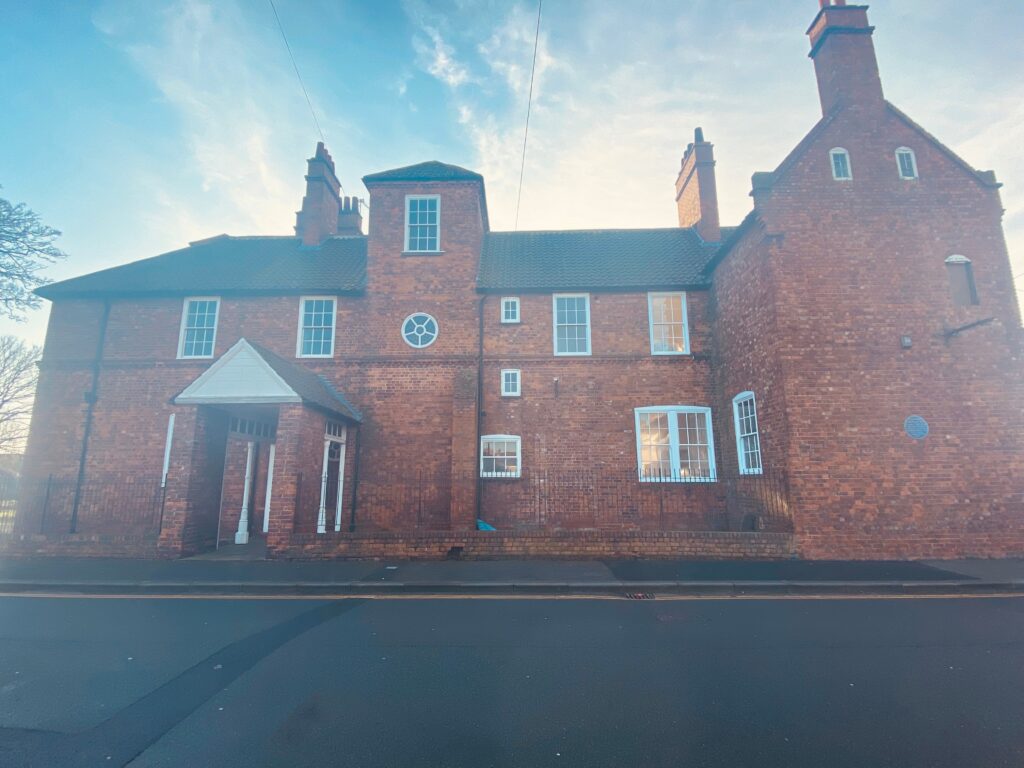
Red Barns. Photo Jackie Dale, Red Barns Bed and Breakfast.
Hunslet Mill and Victoria Works – Leeds – Top Ten 2015
The Hunslet Mill and Victoria Works is a significant multi-storey complex of redbrick mill buildings, and arguably the last, and the largest, of Leeds’s great flax-spinning mills. William Fairbairn, who designed Grade II*-listed Hunslet, was a leading designer of industrial buildings and was responsible for the mill and model village at Saltaire outside Bradford, now a UNESCO World Heritage Site. Regrettably, after falling out of use in the 1970s the Leeds buildings remained vacant. In 2015, the Mill and Works were nominated for the Victorian Society’s Top Ten Endangered Buildings list. In 2017, a project to restore and convert the building into a high-density residential complex was approved by Leeds City Council, and construction started that same year. Completed in 2022 at a cost of £50 million, the development is comprised of 358 one, two, and three-bedroom apartments, arranged across a combination of newbuild and converted buildings. Historic England praised the developer for their uncompromising ‘vision and commitment’, acknowledging the commercial success of the scheme.
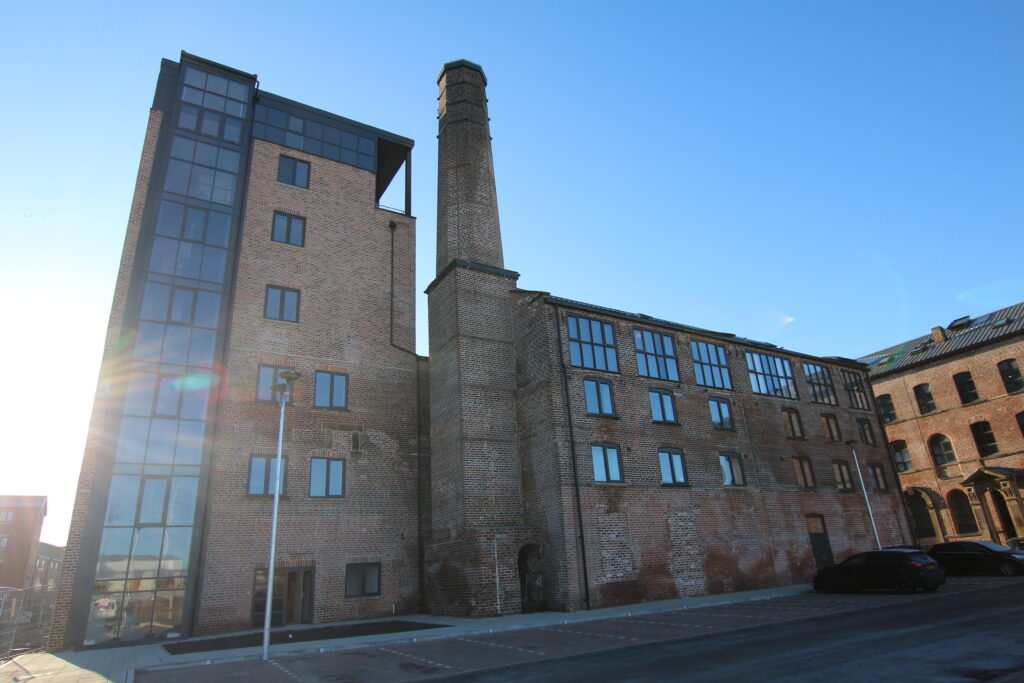
Victoria Riverside, Hunslet Photo: Beckwith Design.
East of England
Jumbo, the Balkerne Water Tower – Colchester – Top Ten 2013
Nominated for the Victorian Society’s Top Ten Endangered Buildings list in 2013, Colchester’s Balkerne Water Tower (better known as Jumbo) is the largest remaining Victorian water tower in Britain. The Grade II*-listed structure was built in 1882 in the Romanesque Revival ‘Campanile’ style. After being decommissioned and sold in 1987, the tower has passed through multiple private owners, and many unsuitable planning applications have been put forward. In 2025, Sir Robert McAlpine Special Projects was appointed for a £6 million restoration of the building. Their plans involved the complete restoration of the water tower and its reopening as a destination venue with visitor experience and historical interpretation spaces. The project was commissioned by North Essex Heritage, who secured a 150-year lease on the building in 2021, and was made possible thanks to an £8 million grant from the National Lottery Heritage Fund and a further £1.1 million from central government. The project stands to benefit residents and visitors alike, ensuring the tower remains a positive and prominent landmark feature in the town.
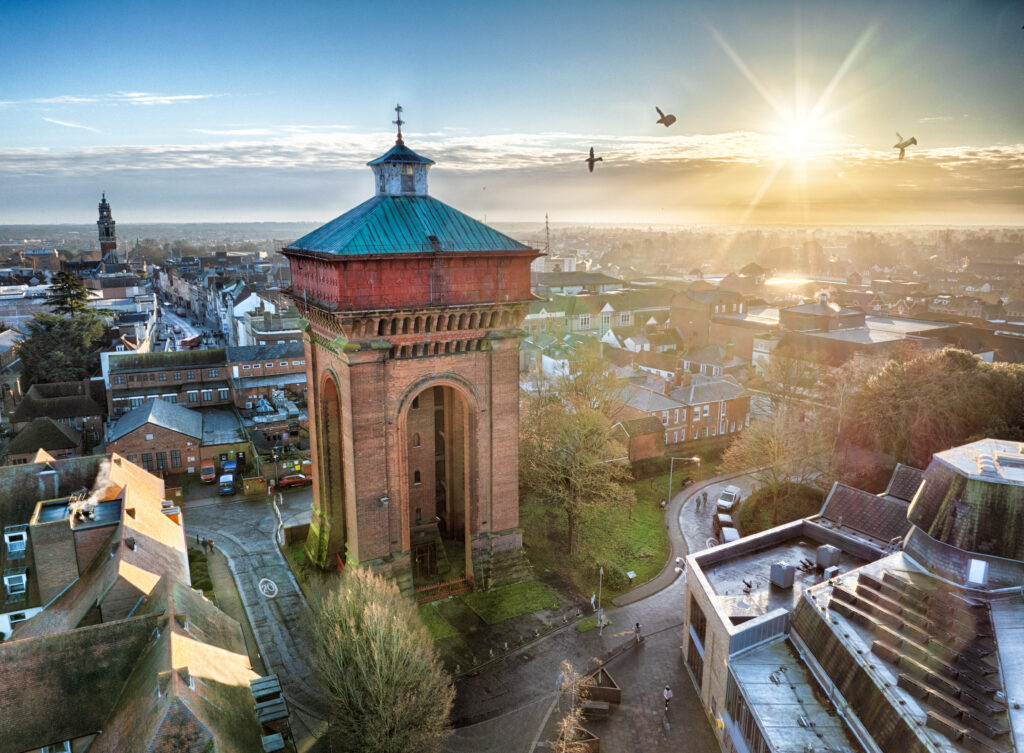
Jumbo Balkerne Water Tower in Colchester. Photograph By Chris Gorman / National Lottery Heritage Fund / North Essex Heritage. 9th January 2025.
The Kursaal – Southend-on-Sea – Top Ten 2024
Only two and a half years ago the Kursaal was nominated for the Victorian Society’s Top Ten Endangered Buildings list. The Grade II-listed Kursaal, built between 1898-99, is George Sherrin’s major work outside London. The architect is notable for having finished the dome of the remarkable Oratory church in South Kensington, after which the dome of the Kursaal is the only one he subsequently designed. In its official listing for the building, Historic England describes the Kursaal as “the principal architectural monument to Southend’s Edwardian boom period.” It was a feature of people’s leisure time for some time, including the Society’s own President Griff Rhys Jones during his Essex youth. The striking, monumental treatment of the dome and its glazed tower make a bold statement both from the esplanade and from out at sea. The building only back in 2024 was mostly boarded up, with a Tesco Metro its only occupant and its future far from clear. A new Council and MP committed to working to turn the seaside landmark’s fortune around. A new leasehold was negotiated. The new lease holder worked with the Council to successfully apply for funding from Historic England’s Heritage at Risk Capital Fund which was announced in 2024. The monies are being spent on repairing and making the building weather-tight with a goal of opening it to the public in 2027 again as a leisure attraction.
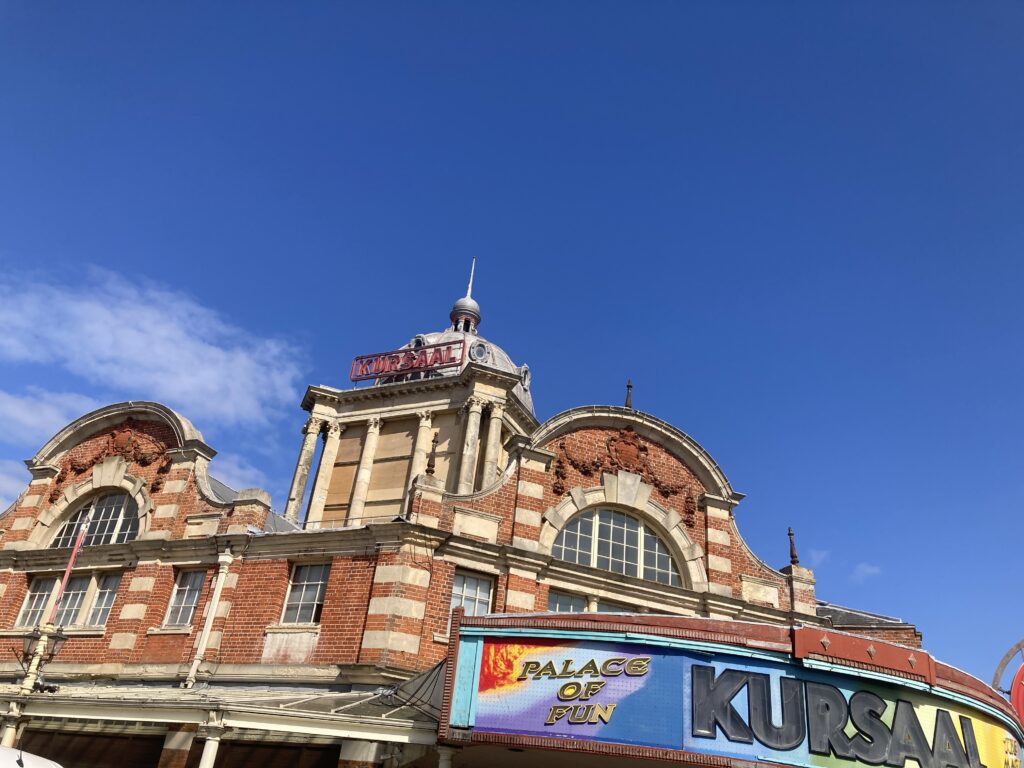
The Kursall in Southend-on-Sea seen in 2024. Photo: Marie Clements / The Victorian Society
South West
Birnbeck Pier – Weston-Super-Mare – Top Ten 2015
Nominated for the Victorian Society’s Top Ten Endangered Buildings list in 2015, Birnbeck Pier is a Grade II*-listed structure in Somerset. Opened in 1867, Birnbeck Pier is unique in its design, being the only pier in Britain leading to an island. In 1994, the pier was closed to the public due to safety concerns and could no longer be used by RNLI Lifeboat crews. There were multiple planning proposals for redevelopment of the island, but all of these were rejected, eventually leading to the nomination of the Pier for the Top Ten Endangered Buildings list. In 2023, North Somerset Council secured ownership of the Pier and Island via compulsory purchase order. Repairs to the island sea wall were started soon after, and by winter 2024 the 1888 boat house, clock tower pavilion, and landside cliff face had been stabilised. However, after RNLI backed out of the project in September 2025 the restoration was almost scrapped. Fortunately, the National Lottery Heritage Fund stepped in to provide £5.5 million, and pier repairs are expected to be completed by summer 2027.
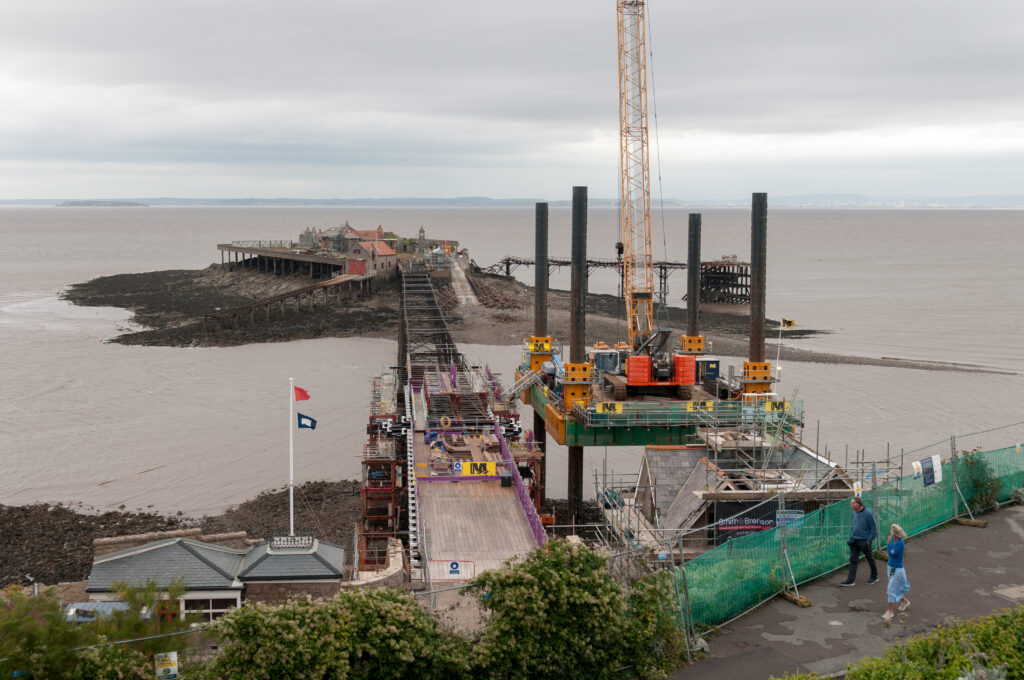
Birnbeck Pier under restoration. Photo: Oliver Mills / The Piers Society
North East
The Wesley Chapel – Hartlepool – Top Ten 2014
Nominated for the Victorian Society’s Top Ten Endangered Buildings list in 2014, The Wesley Chapel is a Grade II-listed Methodist church in Hartlepool, with a Corinthian tetrastyle stone portico. Built in 1871, the building is located on a busy road junction and eventually fell into disuse. The forecourt became a car park, and at one point the chapel was in use as a nightclub. In 2009 Jomast Developments Ltd, was granted permission to convert the former Chapel into a 49 bed hotel, but no work was carried out. A new permission was granted in 2013 but despite pressure from the council, only minimal remedial work to discharge consent conditions was completed. The building was subject to an arson attack in 2017, which increased the conservation deficit associated with its redevelopment. To ensure the project went ahead as planned, the local Town Deal agreed to fund the deficit, while the private developer took on the costs associated with converting the building to a 32-bed hotel. Historic England were consulted about the project and agreed that it would warrant removing the building from its at-risk register. The restoration of the building continues. Progress on the installation of bedrooms was well under way in March 2026 and a fully fitted kitchen serving the main function suite is ready to use. A website is online for wedding and venue hire available from 2027.
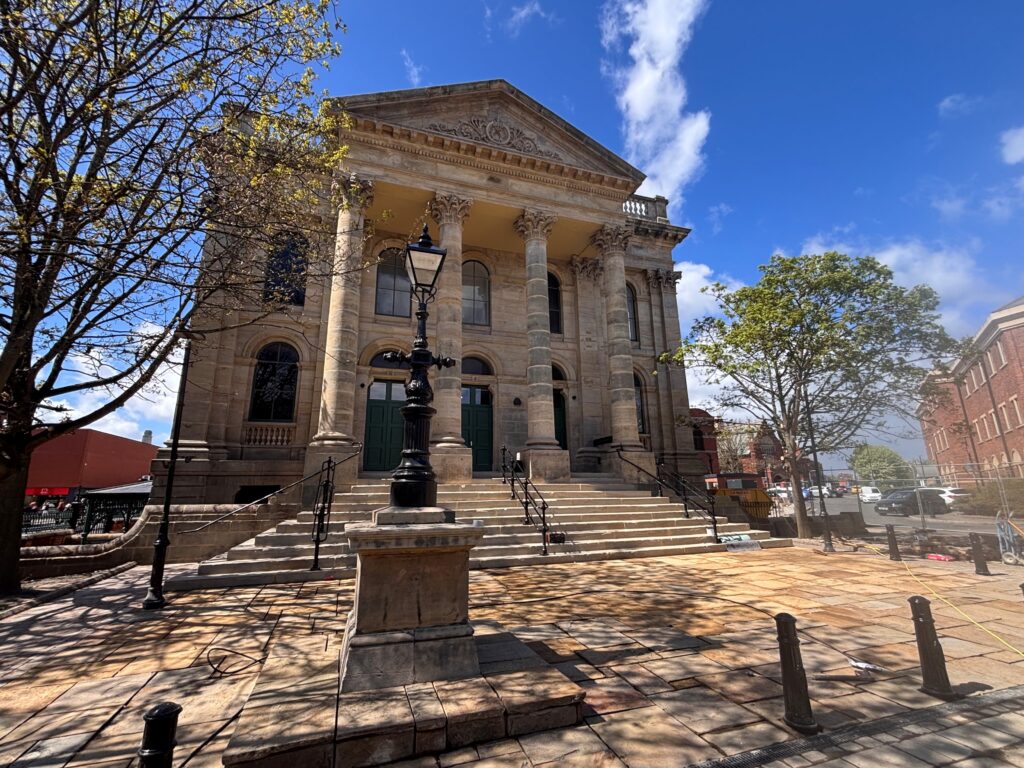
Front elevation of the Wesley Chapel. Photo: Ian Williams Jomast
South East
Aldermaston Court – Berkshire – Top Ten 2025
Nominated for the Victorian Society’s Top Ten Endangered Buildings list in 2025, Aldermaston Court is a Grade II*-listed mansion. The house was rebuilt in the Tudor revival style in 1848-51 by P. C. Hardwick, replacing the pre-existing Jacobean mansion. The house and landscaped grounds passed between private owners until the 1930s, when the estate was broken up and used for wartime and scientific research purposes. This included the construction of the MERLIN reactor, and later the Atomic Weapons Establishment, which was central to Britain’s nuclear programme. Before eventually being abandoned in 2012, the house served several purposes, including use as a school, hotel, and conference centre. Following Aldermaston being included on the Top Ten Endangered Buildings list In 2026, the Ministry of Defence purchased 139 acres of land to the northern boundary of an active Atomic Weapons Establishment site, which includes Aldermaston Park, and the house. The motivations were security-related, and it was the MoD’s understanding that the move would support its military infrastructure, but the purchase also includes assurances that the park’s historic buildings will be repaired and restored.
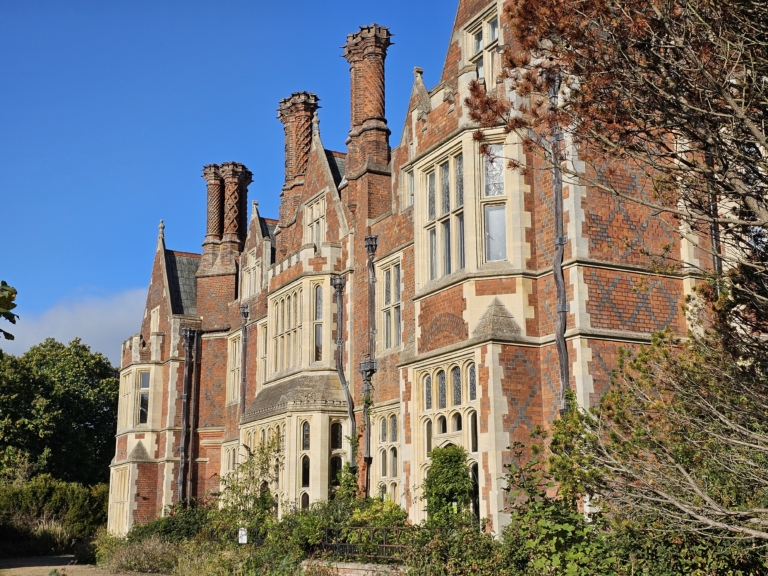
Aldermaston Court. Photo: AWE