
The Winter Gardens in Great Yarmouth are Grade II-listed and were built between 1878-81.
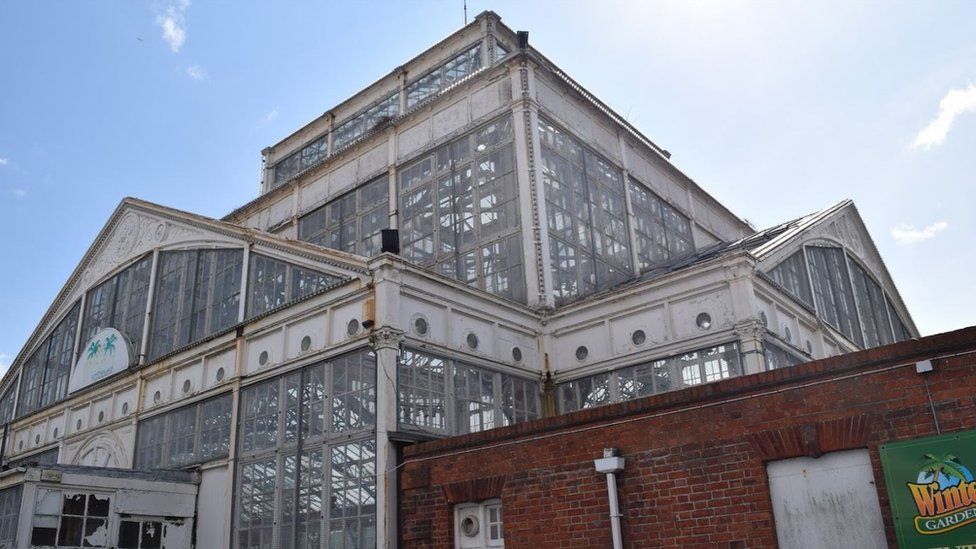
Photo Credit: The Victorian Society.
Grade II*-listed, 1878-81, John Watson & William Harvey
It seems incredible to think that this striking glass and iron structure was originally designed and constructed in Torquay, and then relocated by barge to its current position in Great Yarmouth, reportedly without a single pane of glass breaking. Yet in 1904, local authority surveyor, J.W. Cockrill, supervised the purchase of the Winter Gardens for Great Yarmouth at a cost of £1,600, stating his case that its relocation would ‘lengthen the season with better class visitors, and on wet days provide for 2,000 persons under cover’. Although some of the glazing has since been replaced, the structure remains largely intact today, giving it the dubious honour of being the last surviving iron and glass winter gardens in the country. However, despite a varied history of use as a ballroom, roller-skating rink and even a German beer garden, it now stands empty and without a clear purpose. The structure retains considerable group value within the context of the Edwardian entertainment district, and the local council is therefore seeking an investor to oversee its restoration as a visitor attraction.
Status Update / March 2026
Having secured £18 million in grant funding from the National Lottery Heritage Fund, the UK Towns Fund, and Historic England, the local council appointed a contractor to oversee works to the building in 2025. The project is being overseen by specialist groups including Historic England, the Royal Botanic Gardens Kew, the John Innes Centre, the University of Cambridge, and the Great Yarmouth Trust, and is expected to provide skills and training for 95 young people not in employment, education, or training. Once completed the building will incorporate high-specification glazing, heating, and cooling systems suitable for people and plants, as well as sustainable technologies such as rainwater harvesting and irrigation. Many original features, including cast and wrought ironwork and lost details of timber screens, will be restored, whilst accommodating a new use as a coffee shop, community space, and tourist attraction, accessible to all.