


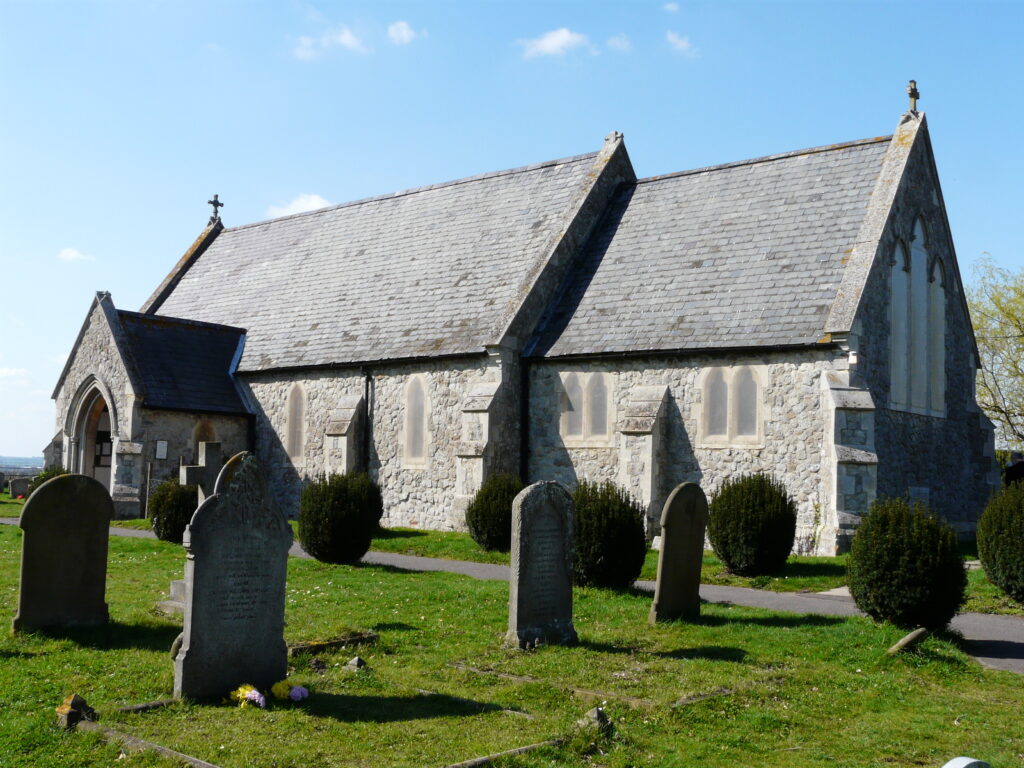
St Barnabas, Mayland Essex. Photo: James Bettley.
The Victorian Society is delighted to announce that it has successfully secured formal designation and statutory protection for the Church of St Barnabas, a remarkably intact small rural church in Essex, built in 1867. The church has now been added to the National Heritage List for England at Grade II.
St Barnabas is exceptional for the near-complete survival of its original Victorian furnishings, including pew benches, font, pulpit and choir stalls. Modest in scale yet carefully designed and beautifully crafted, these fittings are of notably high quality and perfectly suited to their setting. Together they form a harmonious and characterful interior that powerfully evokes the spirit of a rural church of the 1860s.
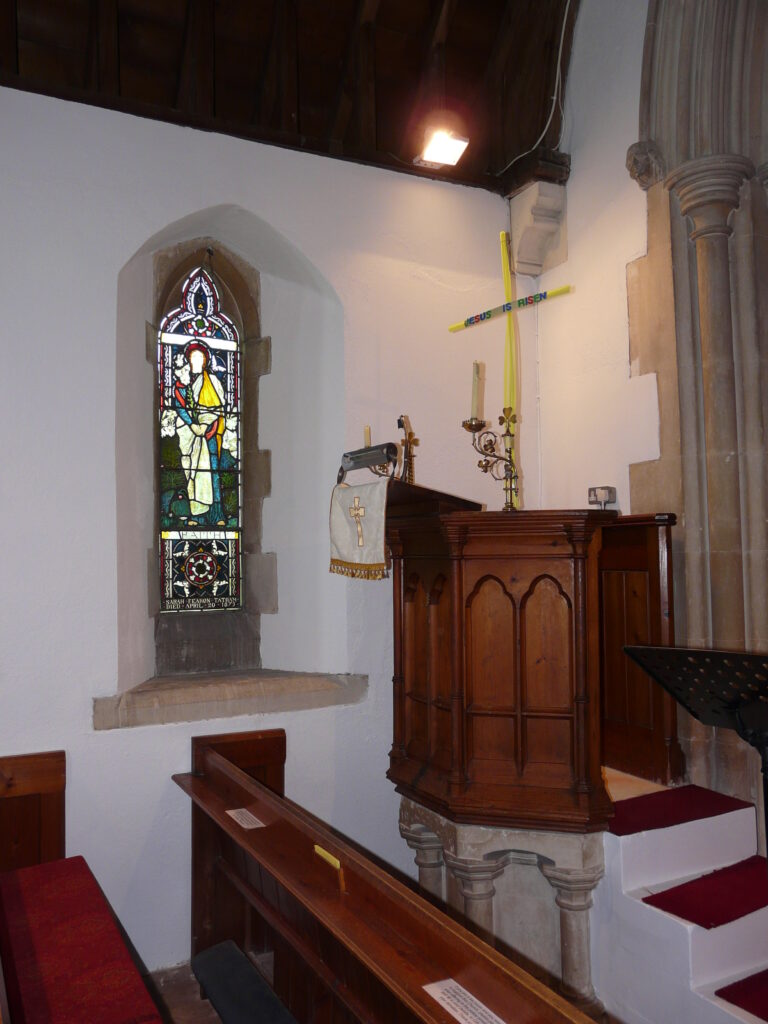
Pulpit and stained glass by Powell & Sons. Photo: James Bettley.
The newly listed status recognises not only the architectural and historic interest of St Barnabas itself, but also the rare survival of its coherent and largely untouched interior. The designation ensures that this charming and evocative church will now be protected for future generations to enjoy.
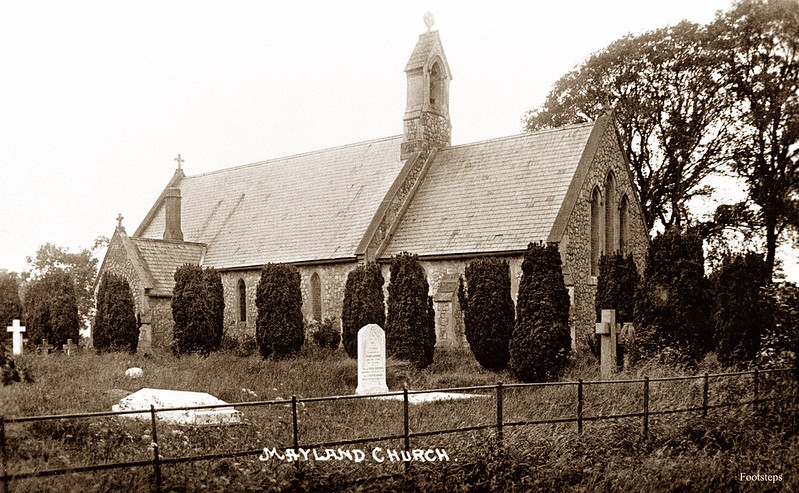
Church of Saint Barnabas seen 1910-1920. Photo: Footsteps Photographs on Flickr
Mayland is an ancient parish on the Dengie peninsula of Essex. It is 8.5 miles S.E. of Maldon. White’s 1848 Directory of Essex described it as “a parish of scattered houses” with 2,030 acres of land and its population at the 1871 census was 246. Its previous parish church had dated from the 13th century and was described as having been in a ruinous, dangerous state for some time before the present church was built on a site some 300 yards to the south in 1867. The old building was then allowed to decay further and was demolished in 1877.
The setting of the new church is very striking. It is high on the ridge line with vistas to the north viewing practically all of the Blackwater. Maldon can be seen in the distance, and on a fine day Stansgate Abbey, the country home of the late Tony Benn MP, can be seen along with Bradwell nuclear power station.
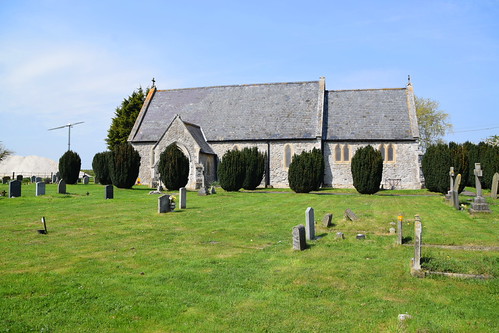
St Barnabas Mayland Essex Photo Simon Knott Essex churches
The church was designed by Philip Charles Hardwick (1822-1892), a distinguished architect from one of Britain’s most notable architectural dynasties. His father, Philip Hardwick, his paternal grandfather, Thomas Hardwick, his maternal grandfather, John Shaw senior, and his uncle, John Shaw junior, were all architects of standing. Trained initially by his father and later by Edward Blore, P. C. Hardwick went on to become a major figure in Victorian architecture, with a busy practice based in the City of London. He designed a number of important bank buildings and served as architect to the Bank of England. Among his most celebrated works were the Great Hall of Euston Station – tragically demolished in 1962 – the Great Western Hotel at Paddington, Charterhouse School, and new wings at Greenwich Hospital. P. C. Hardwick was also the architect of Aldermaston Court, which was on our Top Ten Endangered Buildings list in 2025.
Hardwick’s design for this simple building is well-proportioned and handsome. The Chelmsford Chronicle said, “the object kept in view in the design has been to combine the simplicity of a rural church with a chaste and ecclesiastical effect”. The style is Early English, the building stone is Kentish rag and the church has a nave, the chancel is separately roofed, there is a vestry and substantial gabled porch.
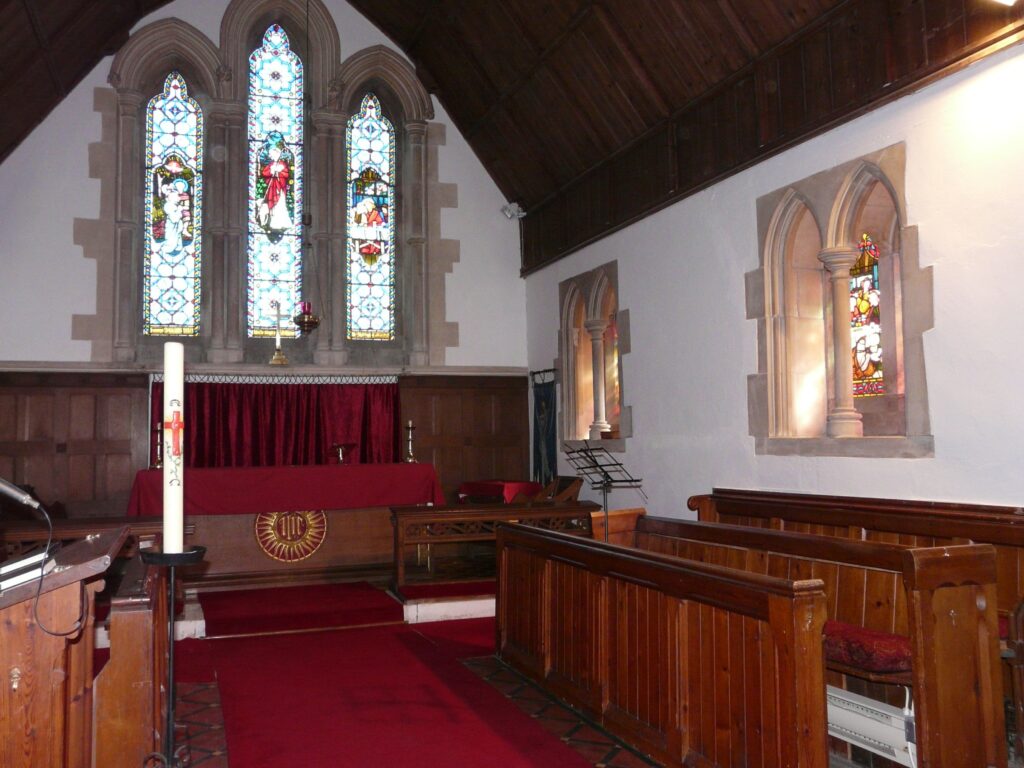
Choir stalls looking towards the altar at St Barnabas Mayland Essex. Photo James Bettley
The Governors of St Bartholomew’s Hospital, which owned the manor of Mayland, supported the proposals for a new church, gave the land for both the church and churchyard, and contributed half the cost of the building – £750 out of an estimated £1,500. The remainder was raised by subscriptions and grants, and the account of the church’s opening in The Chelmsford Chronicle lists donations ranging from two guineas to £50, the latter contributed by each of the churchwardens. The Governors also paid for the chancel paving. Their treasurer, William Foster White, laid the foundation stone on 3 July 1866, and their almoner, Arthur Powell, donated a stained glass window – the one in the north wall showing St Bartholomew. He was related to members of the family who, as Powell and Sons, provided the stained glass that filled almost all the church’s windows at the outset. Powell and Sons were one of the major firms of the Victorian and Edwardian eras. St Barnabas is exceptional for its size in that not only do all its windows contain stained glass, but that glass was supplied by such a notable firm as part of the original construction. James Bettley notes in The Buildings of England: Essex that the stained glass is “the best feature of the church, unexpected in such an out-of-the-way place. Apart from the war memorial window by Jones and Willis, 1920, all [is] by Powell and Sons, and the variety demonstrates just how much freedom their individual designers had. Most of it [is] by Henry Holiday.”
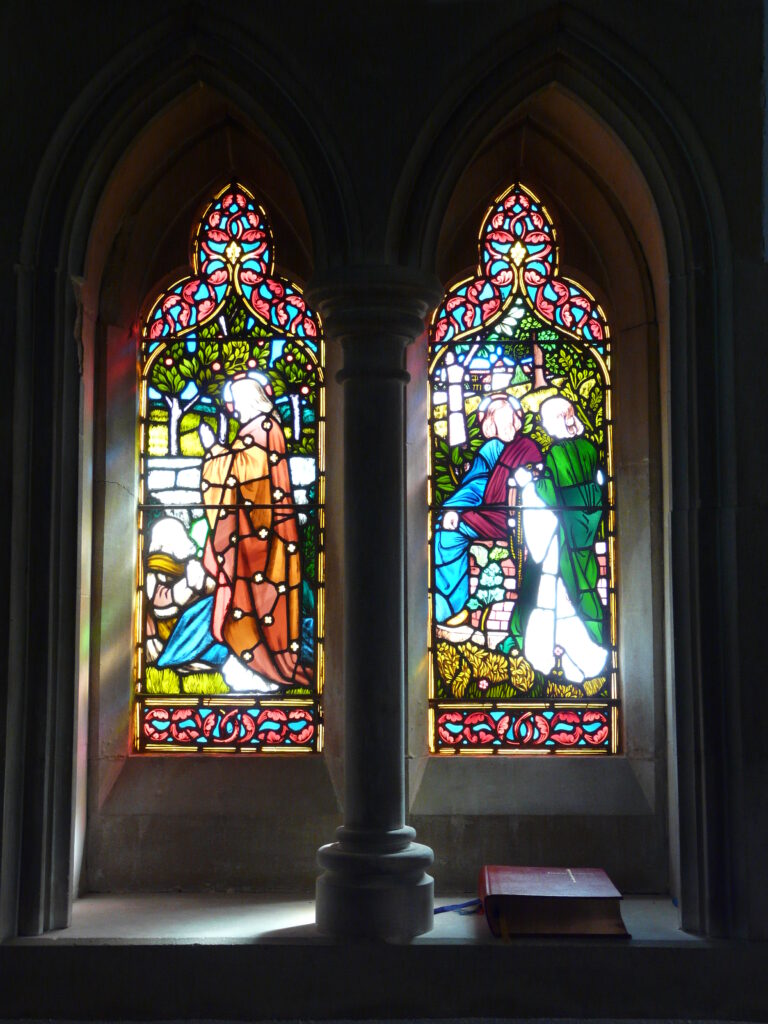
Stained glass by Powell & Sons at St Barnabas Mayland Essex. Photo: James Bettley.
The church was opened in June 1867 and was consecrated by the Bishop of Rochester, followed by a celebratory lunch in a nearby barn. Over 150 years later the building survives with very little alteration.
Thanks to the Minister and to Historic England for accepting the listing request for this building.
St Barnabas’s services and events can be viewed here.

Stained glass by Powell & Sons. Photo: James Bettley.