


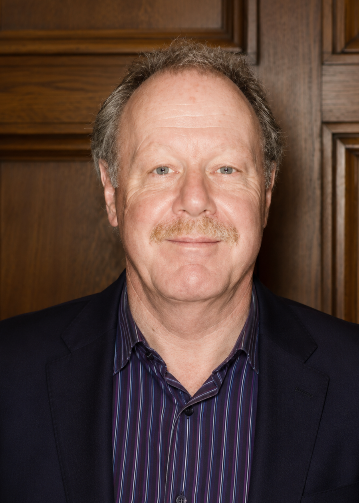
Joe Holyoak — An Appreciation
The death of Joe Holyoak is a profound loss, not only to the Birmingham & West Midlands Group of the Victorian Society, but to Birmingham itself.
Architect, urban designer, conservationist, teacher, writer and campaigner, Joe possessed an extraordinary knowledge of Birmingham: its architecture and architects, its streets and neighbourhoods, its planning history and the many layers through which the city had evolved. He combined that knowledge with a wonderfully genial manner, a dry wit and an unfailing willingness to share what he knew.
For the Victorian Society, Joe was one of our great repositories of knowledge and wisdom. His association with the Society extended over more than half a century. He twice served as Chairman of the Birmingham & West Midlands Group, from 1980 to 1987 and again from 1996 to 2000, and latterly as Vice-Chairman and Chairman of our Casework Committee.
Joe belonged to the generation of conservationists who witnessed the enormous destruction of historic Birmingham during the post-war decades and determined that the city’s architectural inheritance deserved better. Yet his conservationism was never simply about resisting change. As an architect and urban designer, he understood that cities must evolve; his concern was always with the quality of that change.
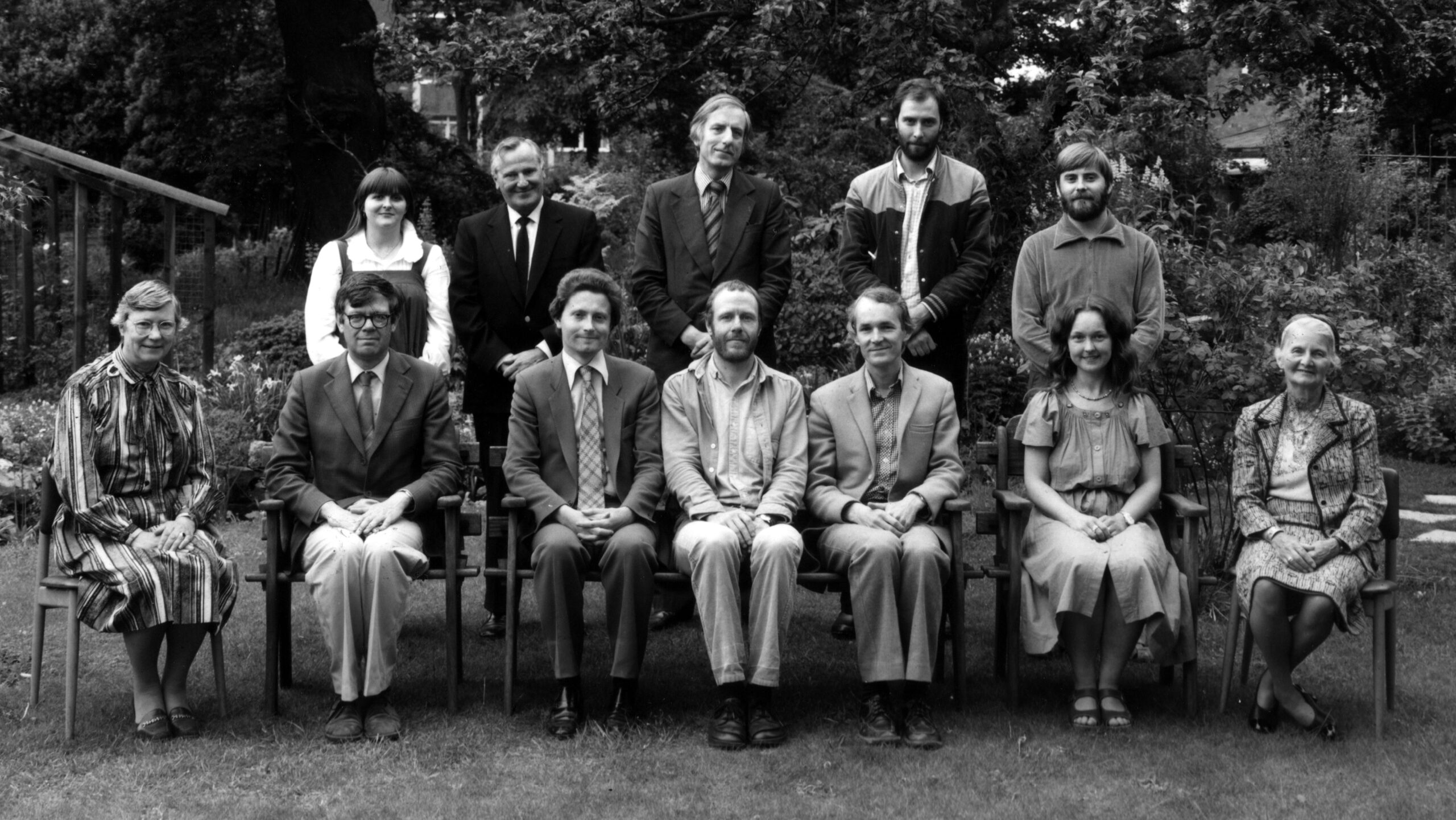
Photo of the Executive Committee in 1974
Joe seated centre
Perhaps nowhere was this better demonstrated than in the battle for Victoria Square and Sir Henry Tanner’s magnificent Central Post Office in the 1970s. Faced with a major redevelopment proposal which threatened the building, Joe did not merely object: he drew up an alternative plan demonstrating that redevelopment could take place while retaining the Post Office. His scheme received planning permission and provided a credible alternative to wholesale demolition.
The fact that Tanner’s great building still stands in Victoria Square today is therefore a particularly tangible part of Joe’s legacy. His approach was characteristic: it was not enough to say that a proposal was wrong; he wanted to demonstrate that there was a better way.
That combination of conservation knowledge and architectural practicality remained invaluable throughout his involvement with the Society. At Casework Committee meetings, a building would appear on the agenda and Joe would frequently know its architect, its history, a previous planning application or some apparently minor detail which revealed its true significance. There was always something reassuring about asking, “Joe, what do you think?” His answer carried the authority of decades of professional experience.
One particularly enjoyable example of Joe’s contribution came during the great restoration of The Grand Hotel, Birmingham. Throughout the project we visited the building regularly to inspect progress, discuss the conservation work and offer our thoughts. It was immensely satisfying to see that magnificent Grade II* building gradually returned to splendour, and Joe brought to those visits the same mixture of professional expertise, enthusiasm and genial curiosity that characterised so much of his work.

The Grand Hotel, Birmingham
Joe with colleagues from the Society and officers from Hortons’ Estate Ltd, 2011
His interests extended far beyond Victorian architecture. His involvement with the Twentieth Century Society reflected the breadth of his architectural appreciation, while his professional work, teaching and writing encompassed architecture, urban design, planning, regeneration and community participation. His commitment to Balsall Heath, including the Neighbourhood Plan and Moseley Road Baths, similarly demonstrated his conviction that good architecture and planning ultimately exist for the benefit of communities.
Above all, Joe understood Birmingham. He knew what the city had possessed, what it had lost and what remained worth fighting for. His knowledge had been accumulated not simply from books, but from decades of walking its streets, studying its buildings, practising architecture, examining planning proposals and participating directly in the conservation battles which shaped the modern city.
That was more than knowledge. It was wisdom.
There are very few people about whom one can genuinely say that when they leave a room, an institution knows less. With Joe’s death, the Victorian Society knows less, and Birmingham knows less too. We have lost an extraordinary store of memory, context, experience and judgement.
As Chairman, I shall greatly miss Joe’s genial presence at our meetings, his measured observations, his formidable knowledge and that remarkable ability to place the latest conservation issue within a much longer history.
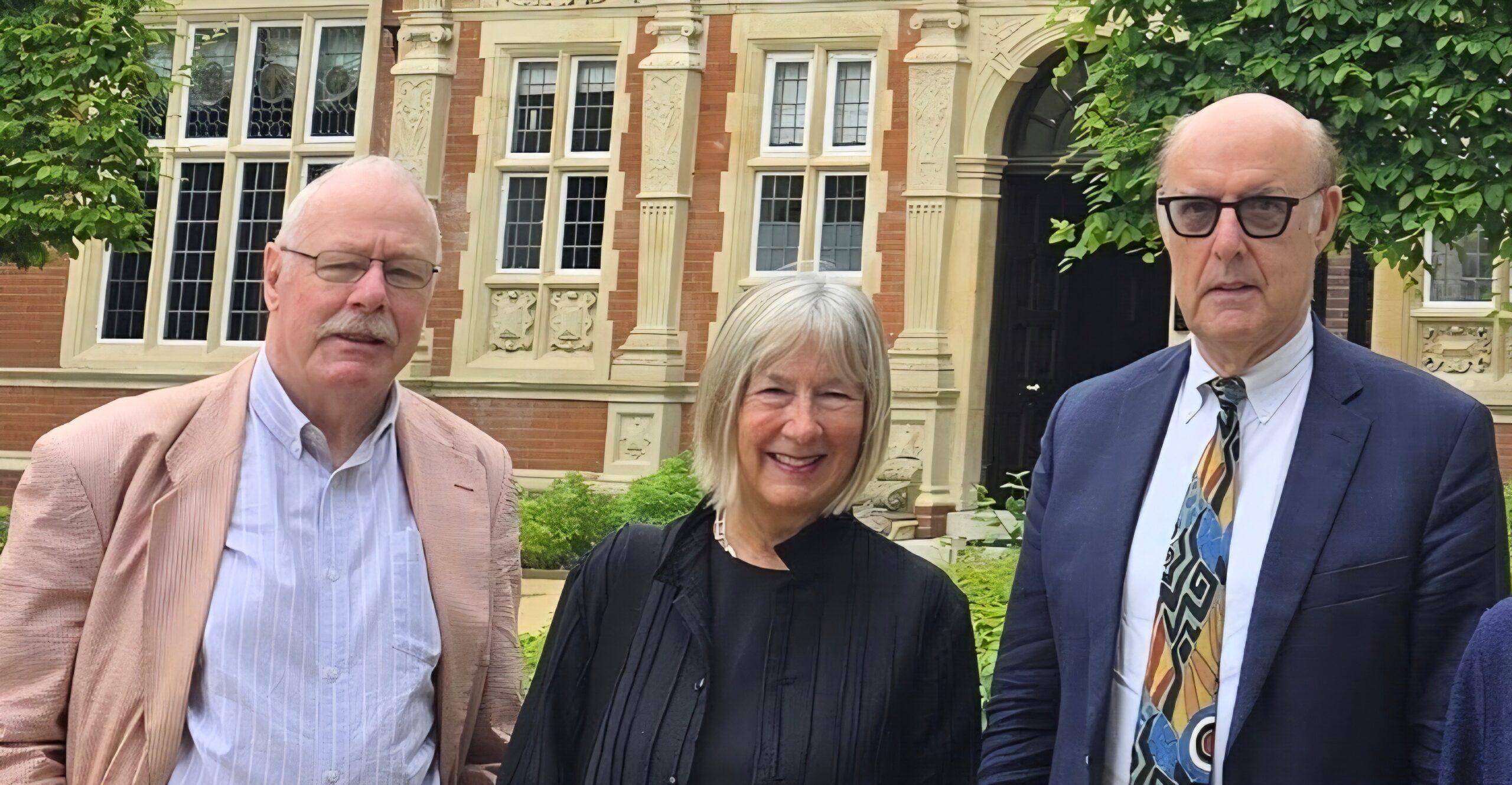
Joe with former Chair, Professor Hilary Grainger OBE and Vice President, Sir David Cannadine
Tudor Grange, Solihull, 2024
The Victorian Society owes Joe Holyoak an enormous debt, as does Birmingham. Sir Henry Tanner’s Central Post Office still presides over Victoria Square; the Grand Hotel once again displays the splendour for which generations fought; and many other buildings and places have benefited from Joe’s knowledge, advocacy and belief that Birmingham’s architectural inheritance mattered.
Birmingham has lost one of its most knowledgeable and genial advocates, and the Victorian Society one of its wisest and most distinguished voices.
Stephen Hartland
Chairman
Birmingham & West Midlands
15th September 2026