


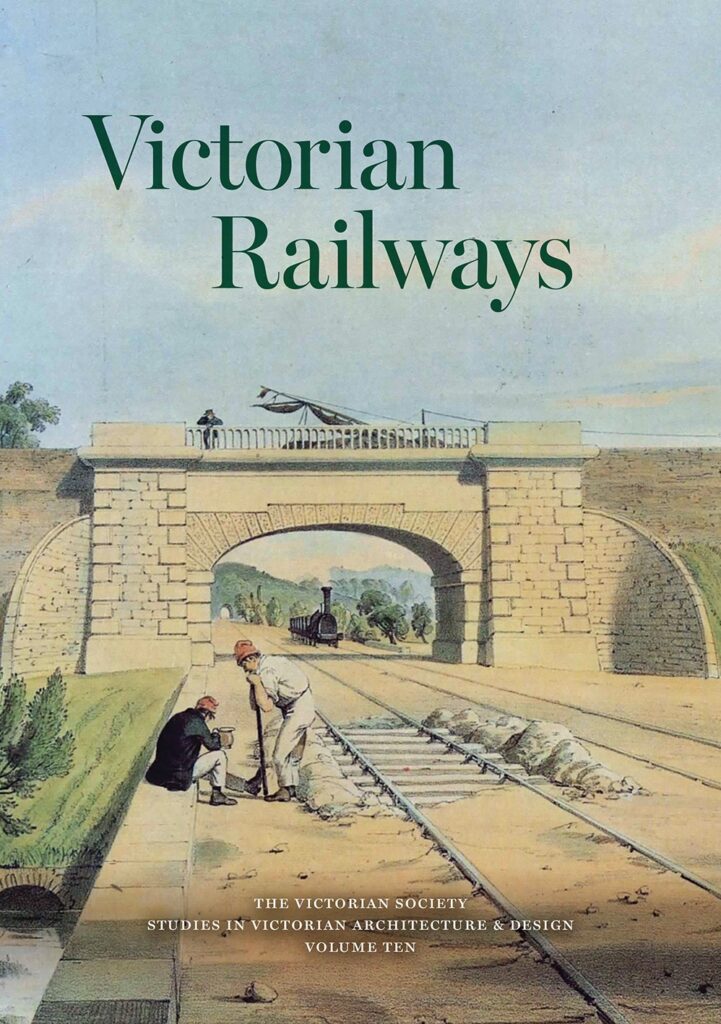
Publication date: 3rd November 2026
Victorian Railways, a new publication from the Victorian Society, brings together leading historians and conservation experts to explore the history, architecture and preservation of Britain’s Victorian railways.
Edited by Simon Bradley and Steven Brindle, it is the tenth volume of the Society’s Studies in Victorian Architecture and Design. Its eight chapters range from the creation of the national railway network and the great termini and trunk lines of the early railway age to station design, excursion travel and the preservation and reuse of redundant railway structures.
Colin Divall examines how Britain’s railway network took shape, focusing on a brief episode in the mid-1840s when the emerging system was subject to strategic official guidance. Steven Brindle traces the history of the old Euston Station, from its beginnings in the 1830s to the destruction of the much-enlarged complex in the 1960s, while Robert Thorne explores the North Midland Railway, the pioneering Stephenson route from Derby to South Yorkshire. Richard Pollard examines the design and operation of Isambard Kingdom Brunel’s first Bristol Temple Meads terminus, a remarkable survival from the early 1840s.
Benedict O’Looney looks at the distinctive stations designed by C. H. Driver for the London, Brighton & South Coast Railway in the 1860s, drawing on his own experience of restoring several of the buildings. John Minnis explores the repeated use of standard station designs by consulting engineers and how identical buildings came to appear on widely separated lines across Britain and Ireland.
The railway’s social history is explored by Susan Major, who uses contemporary records to reconstruct the experience of working-class Victorian women travelling on the ‘cheap trips’ offered by excursion trains. Finally, Simon Bradley examines the afterlives of redundant railway buildings and structures, hundreds of which – from stations to signal gantries – have been relocated and preserved within the heritage sector.
The volume also reflects the Victorian Society’s long involvement in railway conservation. The Society played a prominent role in the campaign to save St Pancras Station in the 1960s and in the battle over the future of Liverpool Street Station in the 1970s and 1980s. Today it is once again campaigning against major redevelopment proposals at Liverpool Street.
Simon Bradley and Steven Brindle, editors of Victorian Railways, said:
“Britain’s railways are among the most extraordinary legacies of the Victorian period, but their familiarity can sometimes disguise just how innovative, varied and surprising they are. This volume brings together different approaches to railway history – architectural, engineering and social – while also considering what has survived, what has been lost and how railway heritage has been preserved and given new life.
“We hope these essays will encourage readers to look afresh at buildings and structures that remain part of the everyday experience of travelling by rail, as well as at some of the less familiar aspects of the railway story.”
James Hughes, Director of the Victorian Society, said:
“Britain’s Victorian railways are an extraordinarily rich subject, encompassing architecture, engineering and social history, and this new volume brings together some illuminating new research. I am hugely grateful to its editors and authors, and delighted that the Victorian Society is publishing it.”
Victorian Railways will be issued to all members of the Victorian Society in November 2026 as part of their membership. It will also be available to purchase from the Society’s website.
Membership of the Victorian Society supports its work campaigning for Victorian and Edwardian buildings across England and Wales. New members will also receive Victorian Railways as part of their membership.
Join the Society here.
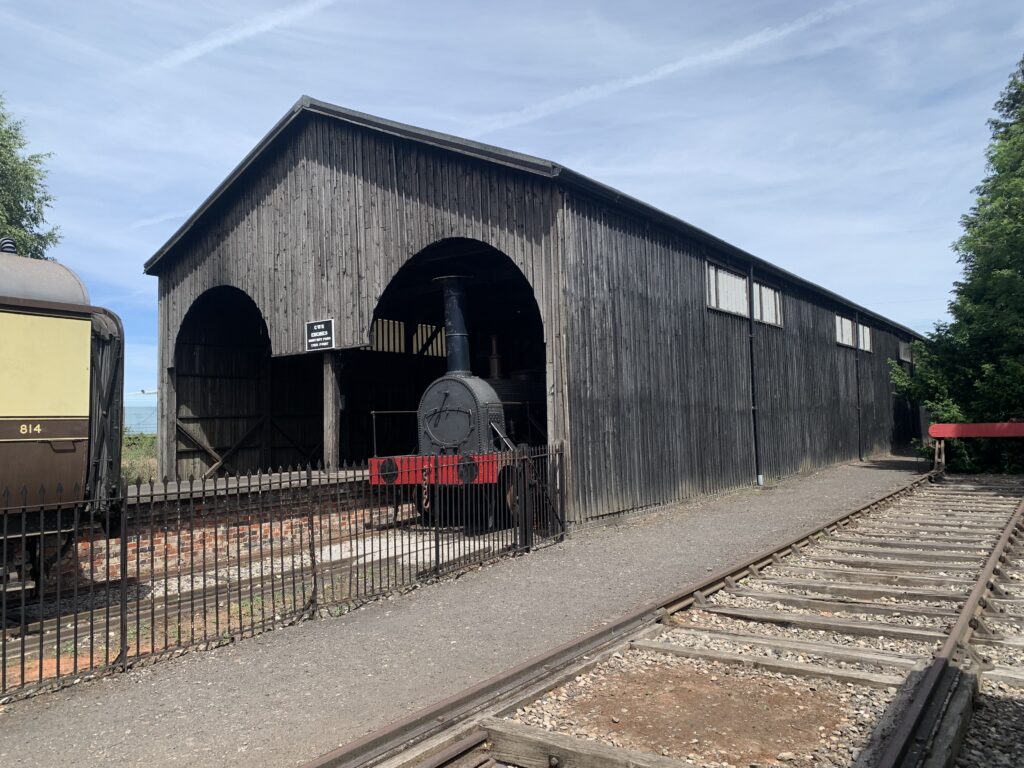
Didcot transfer shed reconstructed at the Great Western Society Didcot. Photo Simon Bradley