
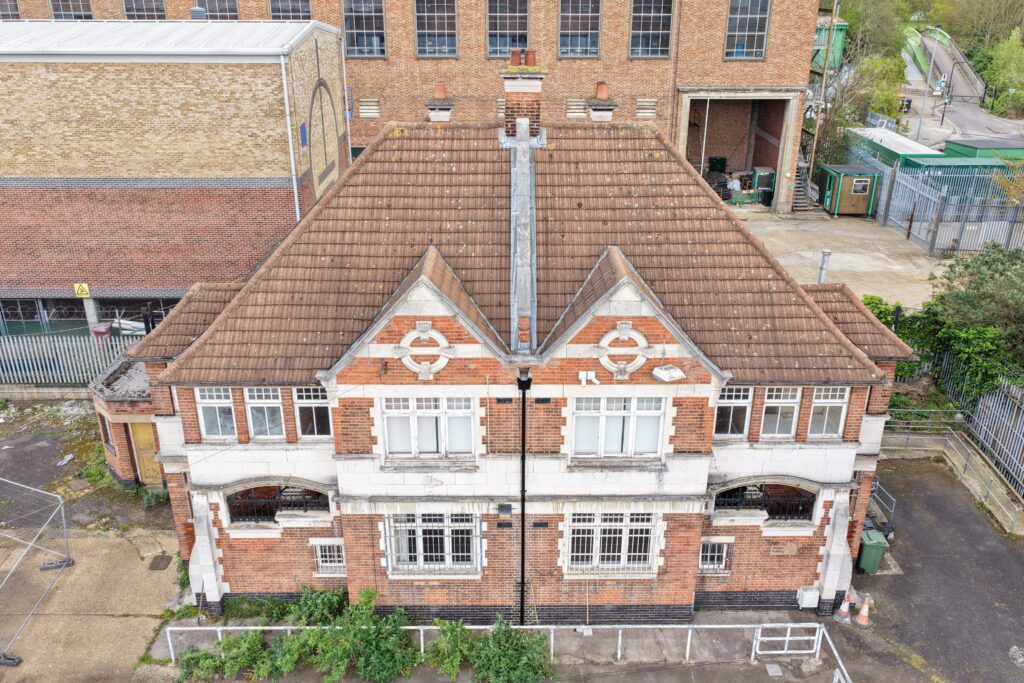
Hackney Borough Disinfecting Station Photo: CAV Aerial
Added to the Victorian Society’s Top Ten Endangered Buildings list in 2026
Grade II, Gordon and Gunton, 1901
On the eastern edge of Hackney, in Clapton, stands a remarkable and little-known survivor: the only purpose-built municipal disinfecting station still standing in England. Tucked between a waste depot and an electricity substation, it is a rare and powerful reminder of the Victorian response to infectious disease. It now faces an uncertain future.
Built in 1901 at considerable expense, the station set a national benchmark for public health infrastructure. At a time when diseases such as smallpox, diphtheria, scarlet fever and measles were widespread – and often fatal, particularly for children – local authorities were given new powers to intervene. In Hackney alone, 116 people died from measles in 1899, 115 of them children, while 252 died from diphtheria. Infant mortality stood at 165 per 1,000 live births, compared to just 4 per 1,000 today.
Under the Local Government Act of 1899, Hackney Borough Council was empowered to enter homes, remove contaminated belongings, and disinfect them using steam cleaning. The Millfields Road site was designed to support this work at scale. It included not only the disinfecting station itself, but also a Shelter House providing temporary accommodation for displaced families, and a caretaker’s lodge. In its first full year of operation, more than 24,000 items were disinfected and over 2,800 rooms treated.
Despite its utilitarian purpose, the complex was carefully designed, incorporating quality materials such as Portland stone and decorative leadwork. It stands as a testament to a period when civic investment in public health was both ambitious and architecturally expressive.
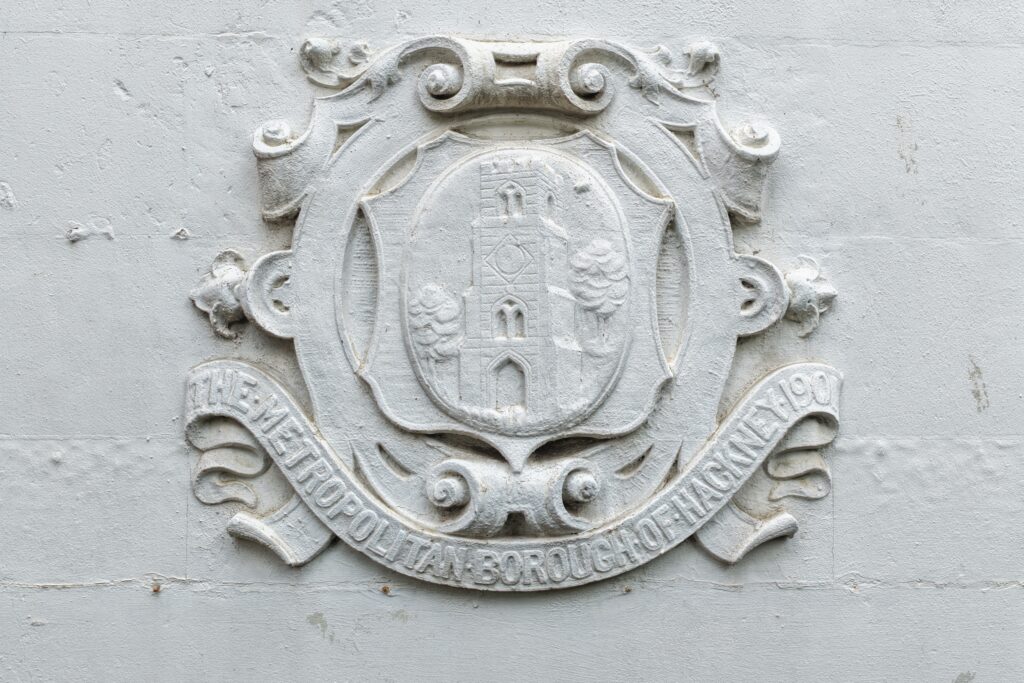
Hackney Borough Disinfecting Station detail of crest Photo: CAV Aerial
The station closed in 1984 and has stood unused for decades. Although the Shelter House and caretaker’s lodge remain occupied, the main building has been mothballed since 2020 and now appears on Historic England’s Heritage at Risk Register. Basic repairs have been undertaken, but the site remains vulnerable, with no clear long-term plan in place.
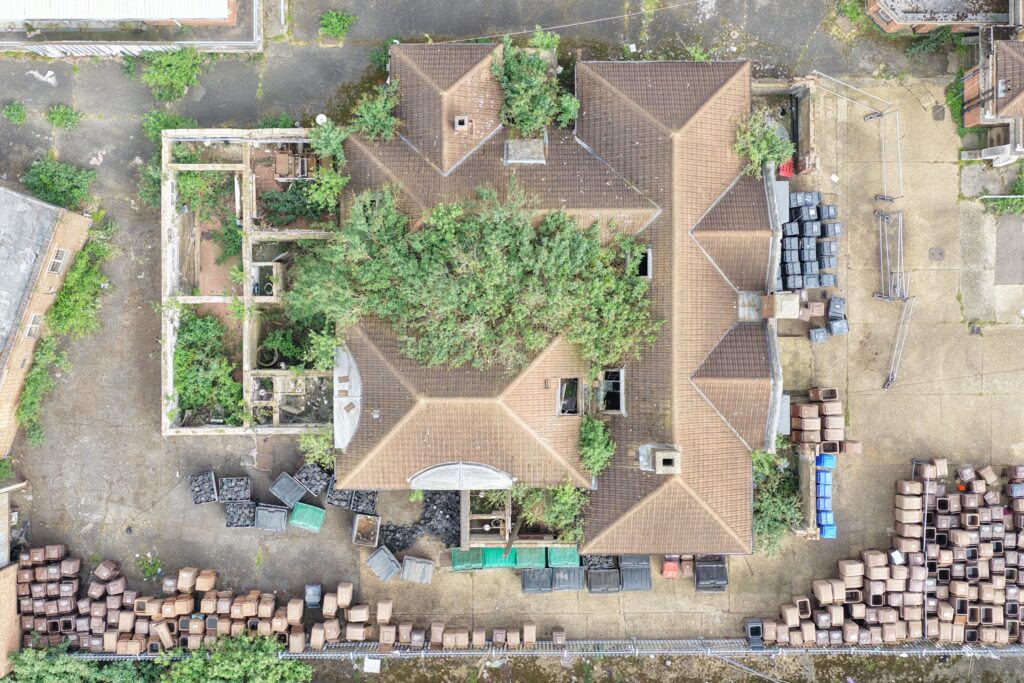
Hackney Borough Disinfecting Station aerial view. Photo: CAV Aerial.
As the only surviving example of its kind, the loss of Hackney’s disinfecting station would be nationally significant. The Victorian Society believes the most viable route forward is to bring the site back into active use through a sensitive sale and reuse. Its inclusion in Historic England’s Heritage Investment Prospectus 2025 presents a timely opportunity to secure a sustainable future for this extraordinary building.
Griff Rhys Jones, Victorian Society President, said: “We may have our own scares and scars from recent experience, but the Victorians started our awareness of public health. Recent epidemics tell us how vital and ground-breaking this initiative was and this building must be reused. If it can’t serve its original purpose that doesn’t mean it can’t stand as a monument to Victorian foresight.”
James Hughes, Director of the Victorian Society, said: “This is an exceptionally rare survivor of a building type that transformed public health in Britain. Hackney’s disinfecting station tells a powerful story about how society responded to crisis, and how civic ambition shaped the built environment. A new use must now be found to secure its future.”