

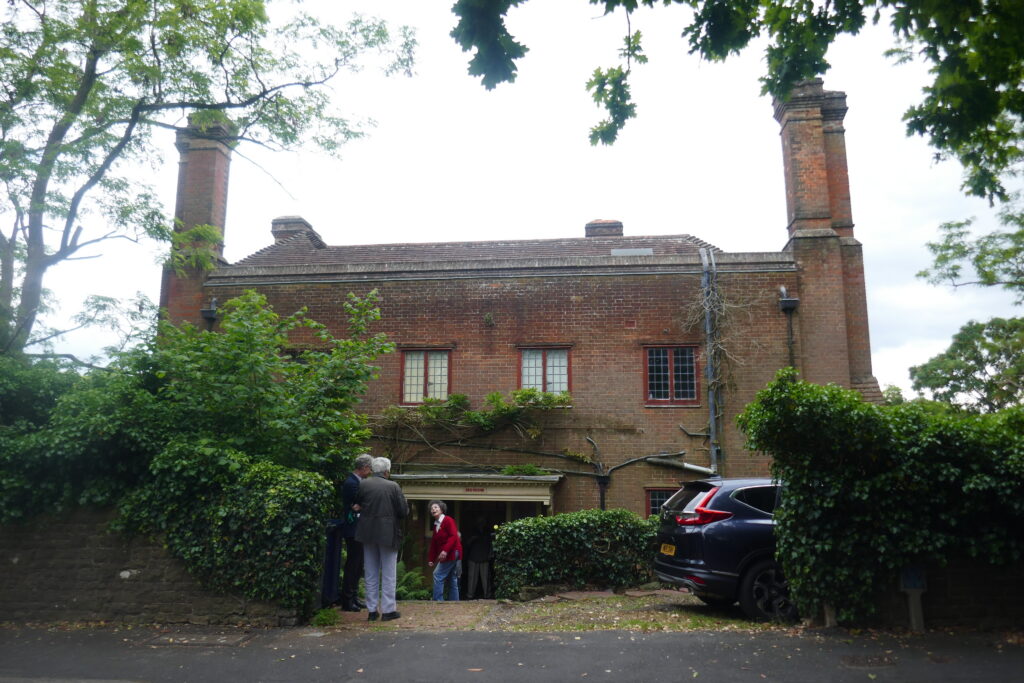
The Red House, Godalming. Photo: Rebecca Lilley, Lutyens Trust
An Early and Seminal House by Sir Edwin Lutyens
The recent offering for sale of The Red House presents an important opportunity to recognise not only one of the earliest and most inventive domestic works of Sir Edwin Lutyens, but also the exceptional stewardship that has preserved the house over the past half-century.
Built in 1897–99 for the Reverend Henry James Evans, a retired housemaster and honorary chaplain of nearby Charterhouse School, The Red House occupies a dramatic site on Frith Hill Road in Godalming. The house is among the first of Lutyens’ designs to confront the architectural challenge of a steeply sloping hillside, and it demonstrates with remarkable confidence many of the spatial and compositional ideas that would later define his mature work.
Constructed in red brick laid in Flemish bond beneath a plain tiled roof, the house appears relatively restrained from the road-facing entrance front, where the composition presents only two storeys. Yet this reserve conceals an astonishing transformation on the garden elevation. As the land falls away, the rear facade descends dramatically down the hillside, rising to three and in places effectively four storeys above the valley below. The effect is theatrical and unexpectedly monumental: a cliff-like wall of brick emerging from the landscape.
Particularly notable are the projecting polygonal bays and towers, where brick cants are combined with timber mullions and transoms painted to resemble brickwork. This subtle manipulation of materials blurs the distinction between structure and surface, producing an architectural language at once robust and highly sophisticated. The continuous leaded-light windows wrapping around corners anticipate the freer handling of mass and volume that would become characteristic of Lutyens’ later country houses.
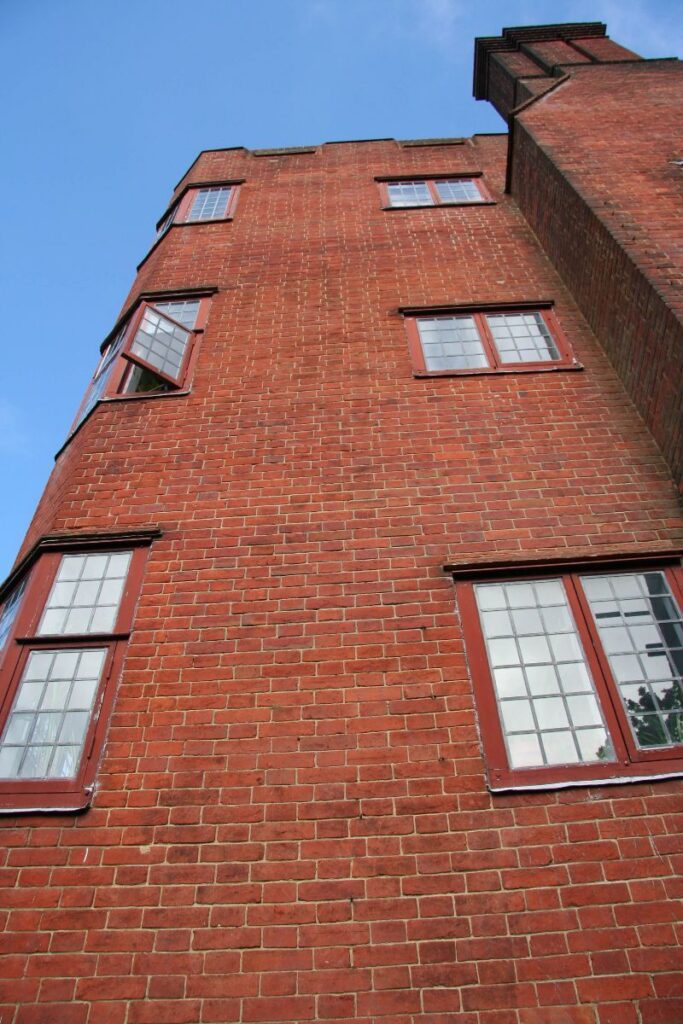
Leaded-light windows wrapping around corners. Photo: Paul Waite, Lutyens Trust
The ingenuity of the design is most powerfully experienced within the interior. The house is organised around a remarkable central open-well staircase rising through the full height of the building beneath a coved roof light supported by columns. The stair, with its shallow risers, deep treads, diagonally set balusters and square newels crowned by vase finials, forms both the physical and psychological centre of the house. Around it, a sequence of interlocking levels revolves with extraordinary spatial intelligence, allowing movement through the building to unfold gradually and ceremonially.
Although modest in scale compared with Lutyens’ later great houses, the planning already displays the spatial mastery associated with his mature work. The procession of spaces, manipulation of level changes, and orchestration of natural light possess a sophistication that recalls the architect’s much grander compositions of the Edwardian period. The stair hall, illuminated from above, gives the interior an almost civic sense of monumentality despite the domestic scale.
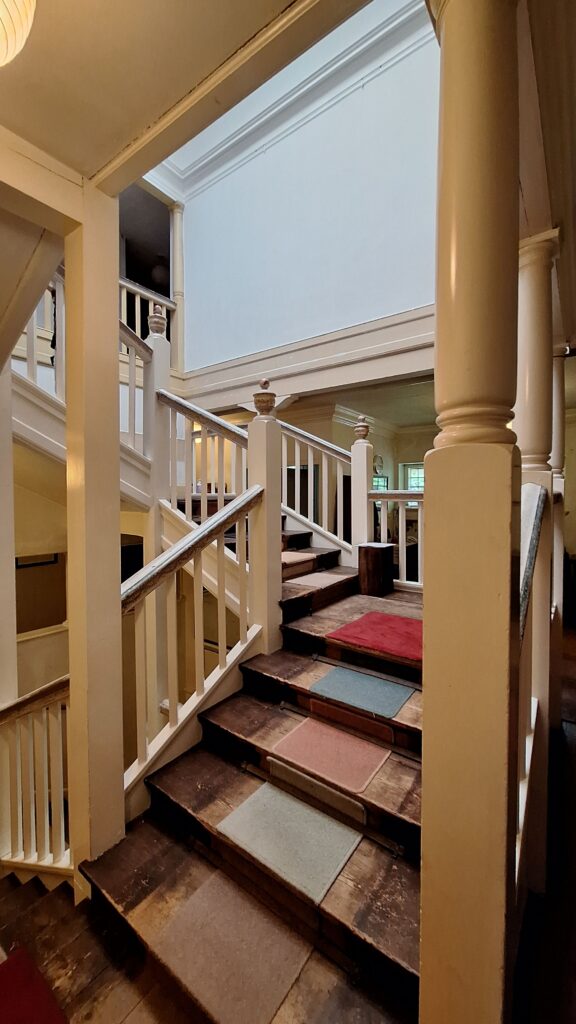
Staircase at The Red House Godalming. Photo: Rebecca Lilley, Lutyens Trust
The principal rooms retain important original features, including striking early Lutyens fireplaces with giant keystones, side pilasters and deeply modelled architectural detailing. Elsewhere, surviving joinery, cupboards and traces of original painted decoration preserve the atmosphere of the house’s Arts and Crafts origins. The gardens, though altered over time, retain elements associated with the original landscape setting and the circle of Gertrude Jekyll, whose influence surrounded many of Lutyens’ early commissions.
The importance of The Red House lies not only in its architectural significance, but also in the remarkable care devoted to it by its present owners. Having known both the owners and the house for more than twenty years, I have witnessed a level of commitment extending far beyond ordinary ownership. Since acquiring the property in 1975, when it was reportedly in a seriously deteriorated condition, they have undertaken an extensive and deeply informed programme of restoration and maintenance.
Their work has been neither cosmetic nor fashionable. Rather, it has represented a sustained act of custodianship grounded in respect for the building’s historical integrity, craftsmanship and architectural ambition. Over decades, they have preserved not merely the physical fabric of the house, but also its atmosphere, character and sense of continuity. In an age when many historic houses are compromised by insensitive alteration, The Red House stands as a rare example of conservation guided by understanding, patience and lived experience.
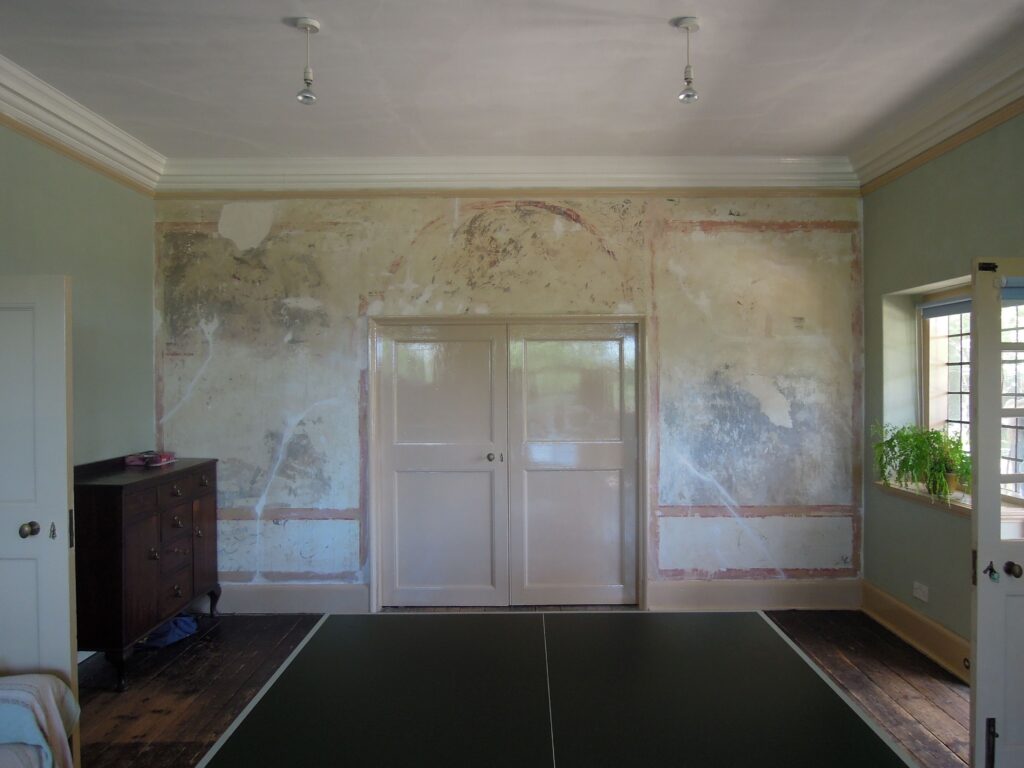
Interior with restoration. The Red House. Photo: Rebecca Lilley, Lutyens Trust
Today the house remains an outstanding, if eccentric, masterpiece of Lutyens’ early career: a building at once picturesque and disciplined, dramatic yet deeply humane. It marks a crucial moment in the architect’s development, when the experimentation of the Arts and Crafts movement began evolving into the assured spatial architecture for which he would later become internationally celebrated.
As The Red House enters a new chapter through its sale, it is to be hoped that future custodians will recognise both the architectural importance of the building and the extraordinary standard of care to which it has long been entrusted.
Text by Paul Waite, Trustee, the Lutyens Trust
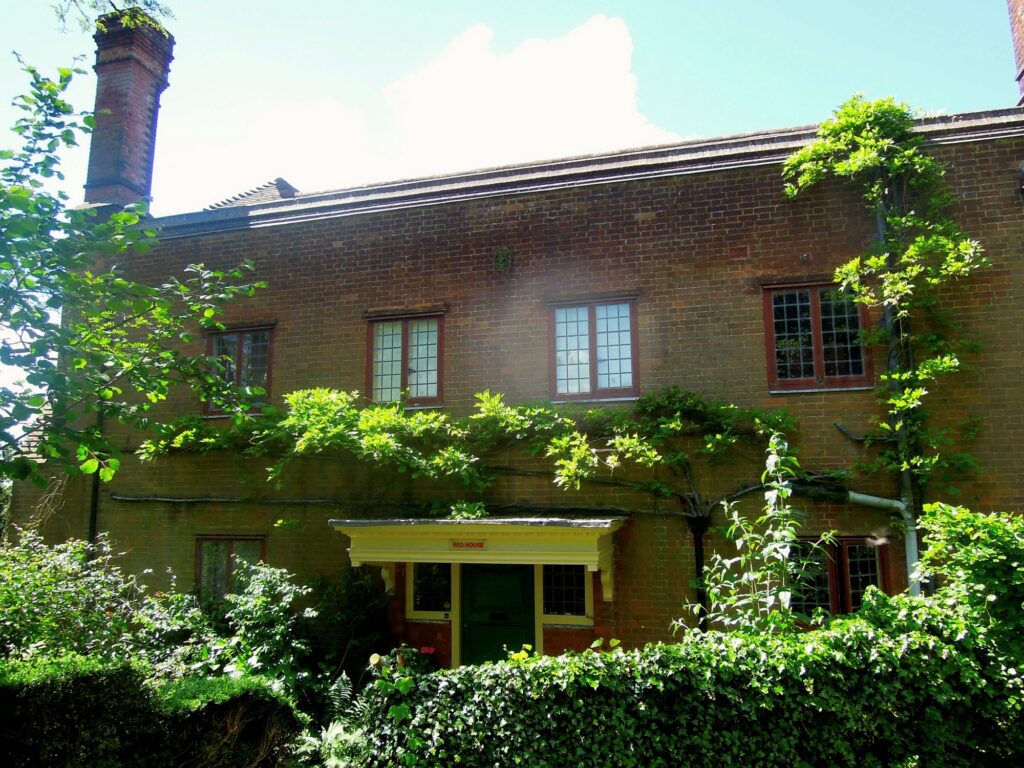
The Red House Godalming. Photo: Rebecca Lilley, Lutyens Trust