
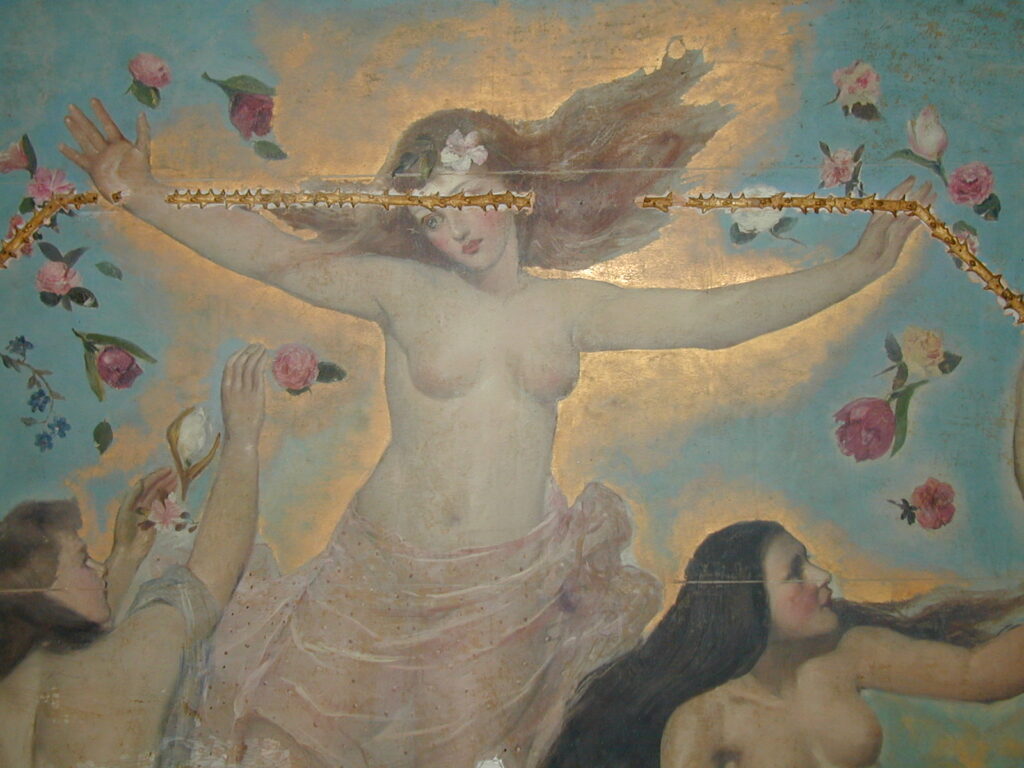
Parndon Hall interior detail of the Bay window ceiling . Photo: Pauline Hockley.
Added to the Victorian Society’s Top Ten Endangered Buildings list in 2026.
Grade II, possibly Joseph Clarke, 1867
Parndon Hall is a remarkable Victorian house now standing neglected within the grounds of a modern hospital site in Harlow. Once a family home of distinction, it contains an extraordinary and little-known artistic legacy, yet today both the building and its interiors are at risk.
Built in 1867 for Loftus Arkwright, great-grandson of the industrial pioneer Sir Richard Arkwright, the house later passed into institutional use. Acquired by Harlow Development Corporation in 1953, it served successively as a school and offices before being taken on by the nearby Princess Alexandra Hospital. The hospital has previously saved the building from demolition and adapted it for use as a training centre, library and skills facility.
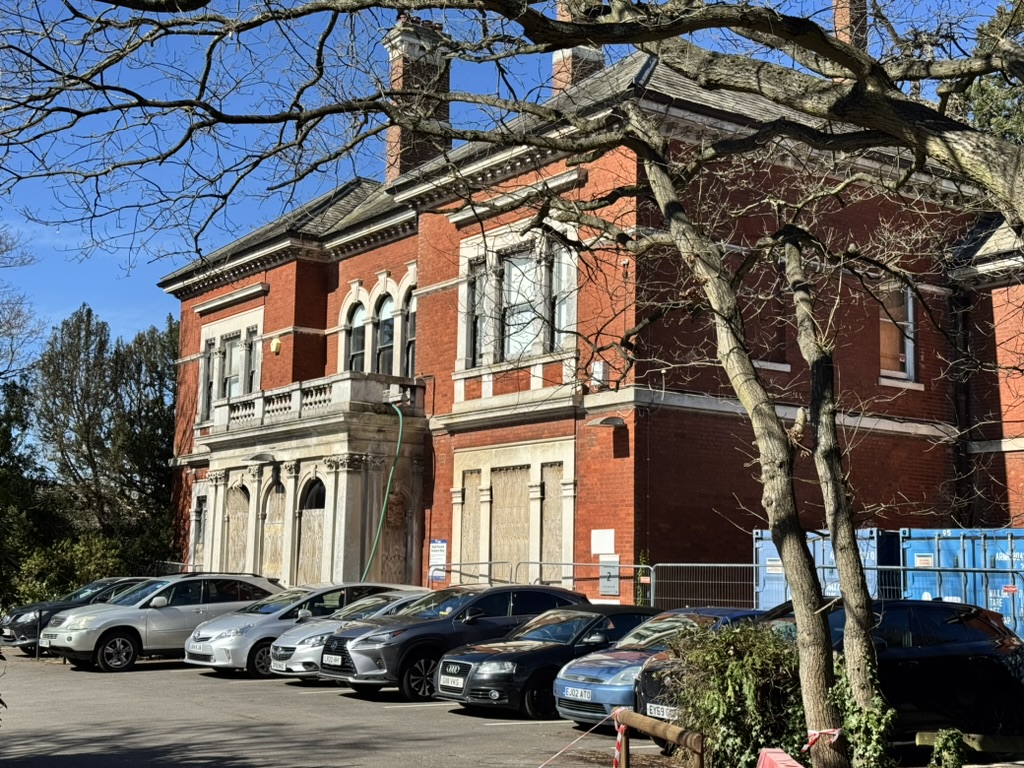
Exterior of Parndon Hall. Photo: Alex Barty
The true significance of Parndon Hall lies within its interiors. The house is decorated with a remarkable series of paintings by Elizabeth Arkwright, Loftus’s wife, which adorn ceilings, doors and wall panels throughout the building. These works, featuring classical figures, seasonal allegories and scenes of social life, demonstrate a high level of artistic skill. Elizabeth is thought to have received formal training, possibly connected to the artist Sir Edwin Landseer, and her work makes Parndon Hall a rare example of a Victorian house with a substantial decorative scheme by a female artist.
The paintings have had a precarious history. Some were whitewashed over in the late 19th century, possibly reflecting changing tastes or sensitivities, and were only rediscovered and restored after the Second World War. Others remain concealed beneath later overpainting. More recently, works attributed to Elizabeth Arkwright have appeared at major international auction houses, underlining their significance.
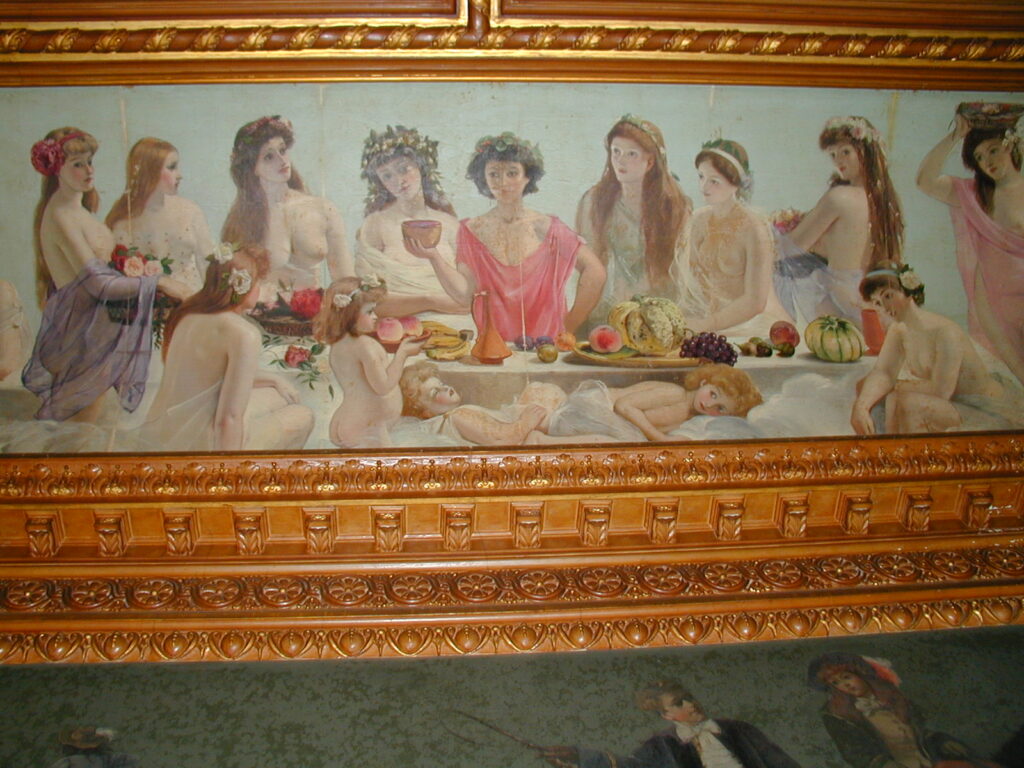
Staircase banquet scene at Parndon Hall. Painted by Elizabeth Arkwright. Photo: Pauline Hockley.
Despite this, the building is now at risk. Following flooding in 2024, repairs were made to the roof and chimney stacks, but the decision was subsequently taken to vacate the building. It is currently used only for storage, and there are no clear plans for its future. The internal environment is a growing concern: fluctuations in temperature and humidity, potentially exacerbated by a recently installed heating system, may be contributing to the deterioration and fading of the paintings.
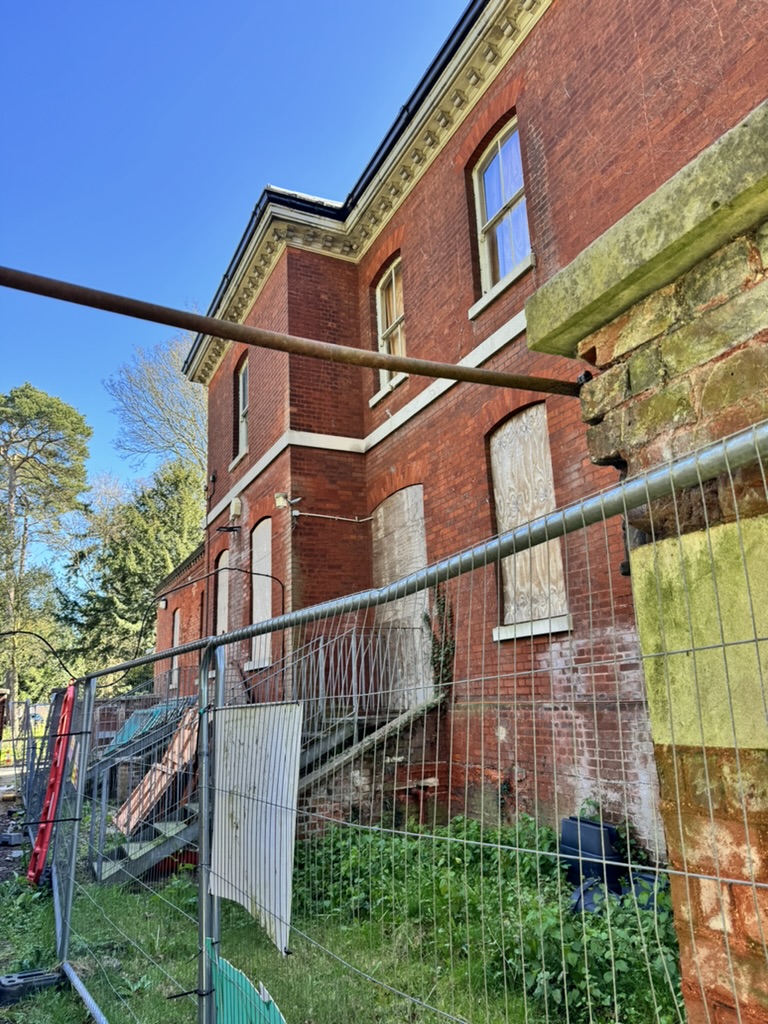
Parndon Hall. Photo: Alex Barty
The wider setting only emphasises the missed opportunity. The hall now sits marooned within an NHS hospital campus, disconnected from the community and with no active use that reflects its historic or artistic importance.
Parndon Hall requires urgent attention. The Victorian Society is calling for a full professional assessment of Elizabeth Arkwright’s paintings, including those still concealed, and for a clear conservation strategy to be put in place. A sensitive and sustainable new use must be found that secures both the building and its exceptional interiors.
Griff Rhys Jones, Victorian Society President, said: ‘‘Grrr. Come on Harlow. This is a worthy building . To just stick it to one side and let it rot is such a waste of a valuable resource. My dad worked at the Alexandra Hospital. I lived in Harlow as a kid. This could be an asset instead of derelict and should be.”
James Hughes, Director of the Victorian Society, said: “Parndon Hall is not just an important Victorian house, but contains a rare and highly significant body of work by a female artist that deserves national recognition. Without urgent intervention, both the building and these remarkable interiors are at risk. A clear plan is needed now to conserve and celebrate this unique heritage asset.”
The full Top Ten Endangered Buildings list for 2026 of Victorian and Edwardian buildings, and the archive of our previous Top Ten lists, can be viewed here.
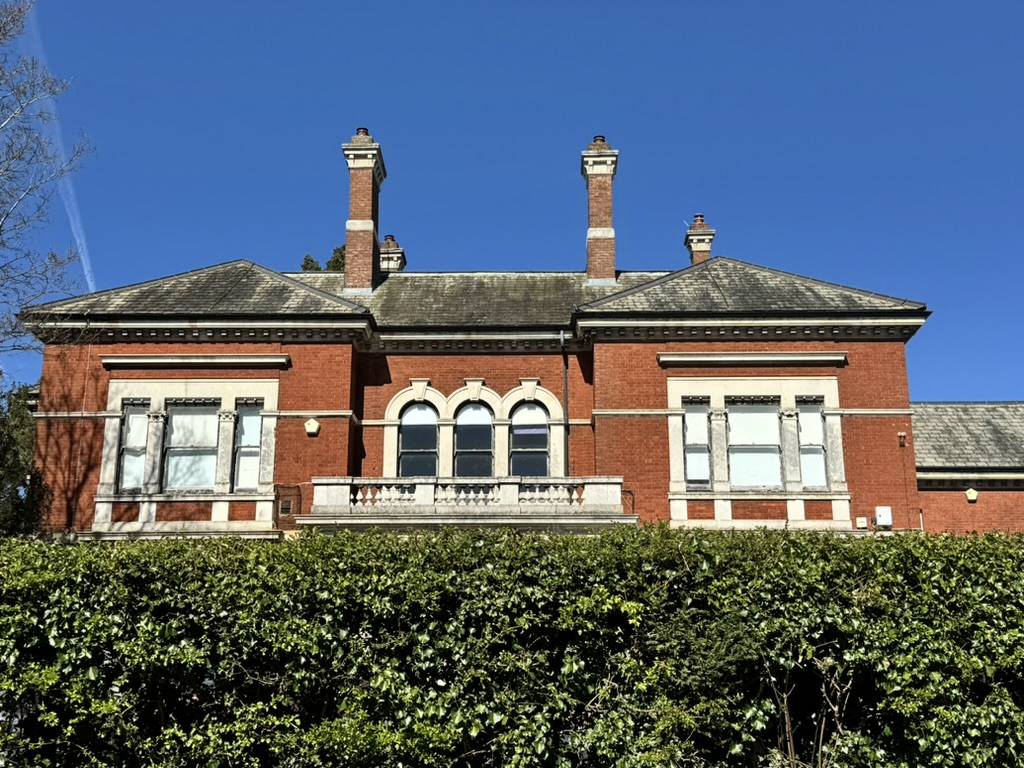
Parndon Hall. Photo: Alex Barty