
Sheffield, Yorkshire

Motacilla, CC BY-SA 4.0
Grade II-listed, 1808, Charles Watson; extended 1866, William Flockton
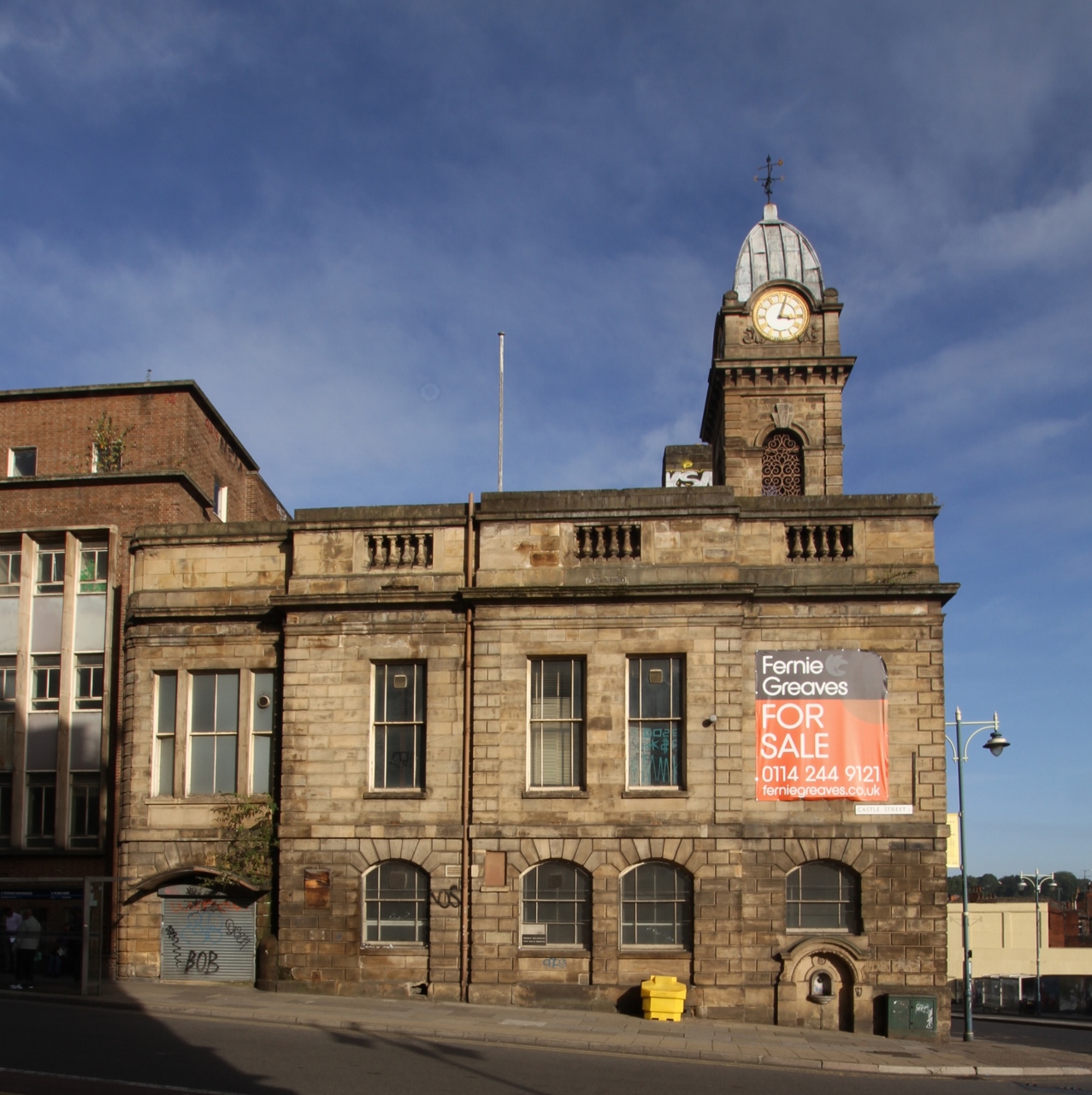
The former Town Hall on Castle Street is the third of Sheffield’s town halls and was built to replace an earlier building next to the parish church, on a restrictive site with limited scope for extension. The initial construction was a five-bay structure, built to a Neoclassical design by Charles Watson, with sufficient space to accommodate the Town Trustees as well as the Petty and Quarter sessions. This, however, was soon found to be inadequate for the needs of a growing industrial city, and it was extended twice – first in 1833, and again in 1866 and 97. The second and third of these interventions, by William Flockton of Sheffield and his partner George Abbott, were the more involved, and altered the building to such an extent that it is now predominantly a work of Victorian civic architecture.
Flockton & Abbott’s work involved creating new spaces for local government and redeveloping part of the building as a meeting place for the Crown Court and High Court. The building was extended northwards by three bays, partly to provide a separate judges’ entrance on Waingate, and the courtrooms were upgraded and connected to the nearby police station through a network of underground passages. The joinery in the first court is of of particular architectural interest, with late-nineteenth century features including a magistrates’ bench with traceried front panel, a canopy with iron posts and crest, and a panelled gallery with pedimented doorcase. The second and third courts, though smaller and plainer, are also significant, with panelled walls and cross-beam ceilings.
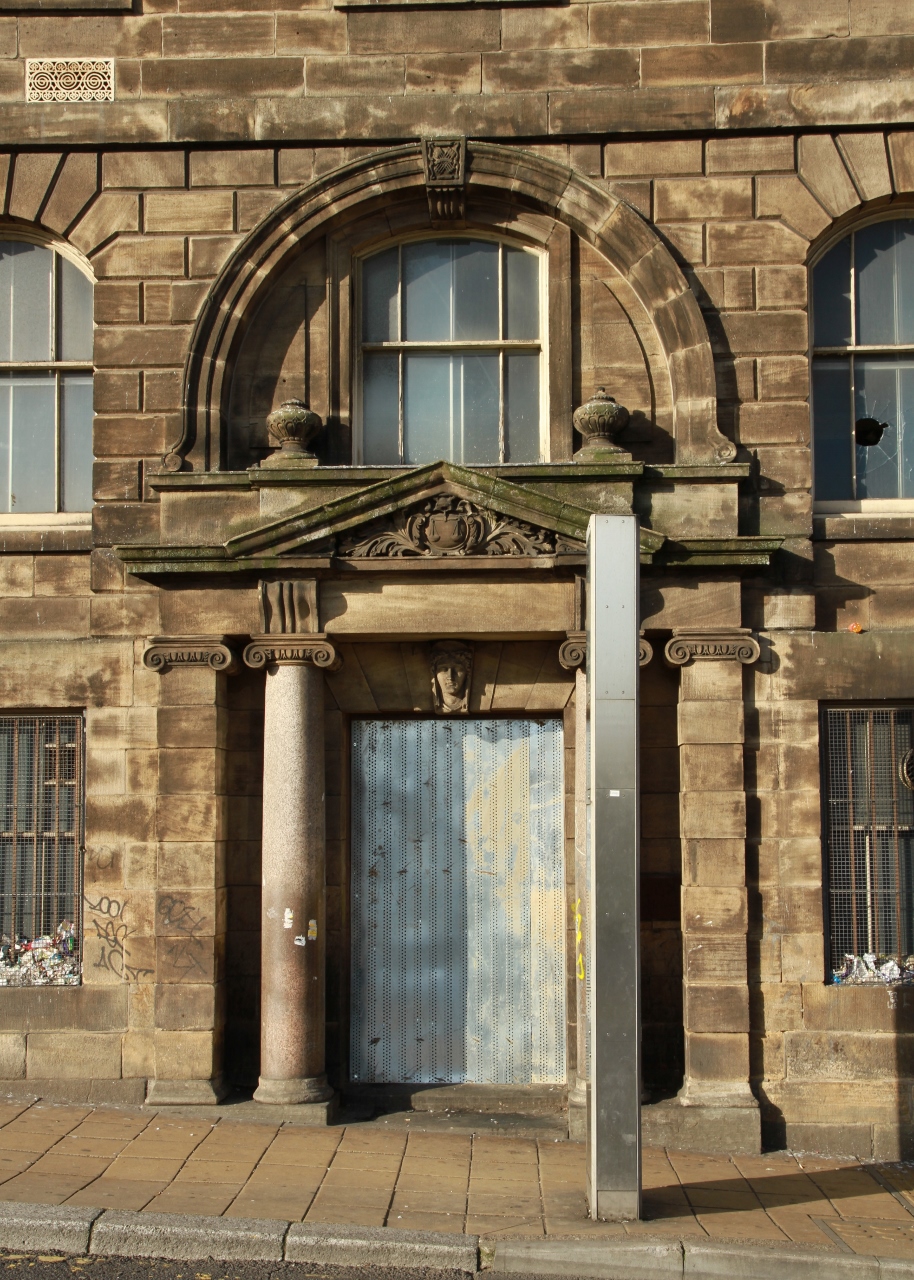
Judge’s Door by Motacilla, CC BY-SA 4.0
The most prominent feature is the square tower of two stages, built using quarry from the demolished parts of the building. Besides having an obvious application as a timepiece, the new structure served as a navigational aid, directing visitors towards the formerly central pedimented entrance. The Neoclassical treatment of the doorframe continued upwards, to the rusticated base of the tower with slit windows, to the round-headed windows with wrought iron grates, and finally to the leaded dome and finial, and in this way it constitutes an early example of responsive, conservation-led design.
The building’s association with local government administration came to end in the 1890s, when the council moved to new premises on Pinstone Street, and it became known as Sheffield Crown Court and High Court. It remained in this role until the 1990s, when these courts moved to new premises on West Bar, and from at least 1997 to the present, it has been left empty and allowed to deteriorate. The current owner has not properly maintained the building, which begs the question of whether a restoration plan has been developed with a list of repair priorities and options for adaptive reuse.
Motacilla, CC BY-SA 4.0
Status Update – 15 July 2026
Following lobbying from the Victorian Society South Yorkshire Group and the Friends of the Old Town Hall, Sheffield City Council have issued a Repairs Notice for the Grade II-listed building. This requires urgent and longer-term work to protect and restore the landmark. Placed on our very first Top Ten Endangered Buildings list in 2007, Valerie Bayliss, the former chair of our South Yorkshire group, set up the Friends of the Old Town Hall in 2014, and has led the ceaseless campaign for action from the building’s owner, and Sheffield City Council for 12 years.
Status Update – May 2026
Photos on social media and drone footage commissioned by the Victorian Society confirmed that part of the roof of the Old Town Hall has collapsed, which caused a stir over the Bank Holiday Weekend.
Status Update – Spring 2026
The Old Town Hall was nominated for re-listing on our Top Ten Endangered Buildings list in 2026, as the owner is yet to take action to restore the building and bring it back into use. Though the building was taken to auction in November 2025 and bidding reached £495,000, the local media reports that a £500,000 reserve was placed on the building, and that on this basis it subsequently failed to sell.
The Friends of the Old Town Hall have contested that the asking price of £2 million is too high, and that the building should be sold as soon as possible to minimise the potential conservation deficit associated with its redevelopment. There are also concerns that whilst it remains under the current ownership it will remain vacant and continue to deteriorate, vulnerable to vandals and thieves.