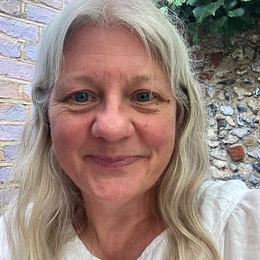


The Victorian Society is deeply saddened to announce the death of Peter Howell, one of the Society’s longest-serving and most distinguished members, a former Chairman, and one of its great and defining characters.
Peter joined the Victorian Society in 1962, just four years after its foundation. Fittingly, it was Peter’s determination to save a threatened Victorian building that first led him to contact the Society. As an undergraduate at Balliol College, Oxford, he was appalled by a proposal to demolish Alfred Waterhouse’s Broad Street front and wrote to the fledgling Victorian Society for help. The reply came from John Betjeman himself, who suggested that Peter organise a petition. Peter replied that he feared his would be the only signature. The proposed demolition was ultimately abandoned.
In 1965, Nicholas Taylor proposed Peter for membership of the Society’s Buildings Subcommittee, then chaired by Nikolaus Pevsner. It was the beginning of an extraordinary sixty years of active involvement in the Society’s casework. Peter later chaired what is now the Southern Buildings Committee and remained a very active (and, as he put it, “most radical”) member of it until his death.
Peter’s contribution to the Society extended far beyond casework. He served on its governing committee, including eight years as Chairman, organised conferences and study tours, lectured, wrote and contributed to its publications, and played an active part in the Society’s life for more than six decades. His recollections of its early years encompass many of the figures who shaped both the Society and the reassessment of Victorian architecture: Pevsner, Betjeman, Jane Fawcett, Nicholas Taylor and, later, close friends including Gavin Stamp and Andrew Saint, whose developing interest in Victorian architecture Peter did much to encourage.
A classicist by profession, Peter was also a formidable architectural historian, with an extraordinary knowledge of nineteenth-century architecture and a particular expertise in its churches and ecclesiastical architects. His interests ranged widely, but, alongside churches, Wales occupied a special place in his scholarship. His publications included The Companion Guide to North Wales and The Companion Guide to South Wales, and he contributed to both the Buildings of Wales and Buildings of England series. With Ian Sutton, he co-edited The Faber Guide to Victorian Churches.
Peter was also a prolific contributor to the Victorian Society’s own scholarly work and publications. He completed the Society’s monograph on G. E. Street following the death of Geoff Brandwood, and contributed over many years to The Victorian and the Society’s Journal. His major monograph on John Francis Bentley was published by the Society in 2020. Nor did his scholarship cease there: his final book, Triumphal Arches: From the Roman Empire to the Modern Age, appeared in 2021.
But those who knew Peter will remember much more than his scholarship and service. He was a wonderfully distinctive presence: warm, mischievous and outspoken, hugely knowledgeable and downright hilarious. His strongly expressed opinions, and the memorable correspondence in which they sometimes arrived, were familiar to generations of Society staff, trustees and volunteers. Behind them lay a profound love of architecture, an absolute conviction that it was worth fighting for, and an equally profound attachment to the Victorian Society.
Peter’s involvement encompassed almost the entire history of the Society. Few people have given it so much, for so long, or have left such a distinctive impression upon it. We will miss him enormously, and remember him with great affection and gratitude.
Our thoughts are, above all, with Peter’s partner Ed, his family and his very many friends.