


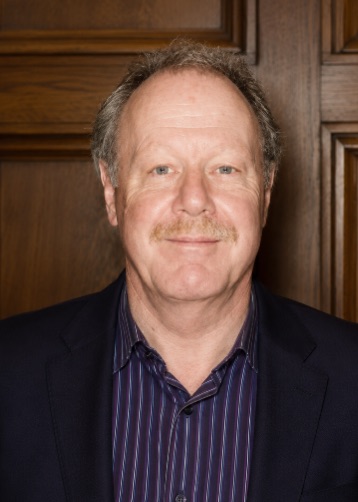
It is extraordinarily difficult to write about Joe Holyoak in the past tense.
For those of us involved with the Birmingham & West Midlands Group of the Victorian Society, Joe seemed such a permanent part of our world: architect, urban designer, conservationist, teacher, writer and campaigner, certainly, but also the familiar and reassuring presence at our meetings whose knowledge, experience and memory we came to rely upon almost instinctively.
I have had the great privilege of working closely with Joe over the past 25 years. Joe was one of the great repositories of knowledge about Birmingham and the West Midlands — its architecture, planning, streets, buildings and, above all, the complicated history of how those places came to be as they are.
Joe’s own service to the Victorian Society stretched back more than half a century, becoming an active member in the early 70s. He twice served as Chairman of our Group, from 1980 to 1987 and again from 1996 to 2000. He therefore provided a remarkable thread of continuity between the pioneering conservation battles of the later twentieth century and the casework we undertake today. Up until his death he rained Vice Chair, and Chair of our Casework Committee.
He belonged to that generation which saw at first hand the wholesale destruction of historic Birmingham and decided that it could not simply be allowed to continue.
Joe was never, however, a conservationist who believed that everything old should be preserved merely because it was old. He was an architect and urban designer, and consequently understood that cities must change. His great gift was understanding the difference between change which enriches a place and change which diminishes it.
One of the finest examples came during the battle over Birmingham’s Victoria Square in the 1970s. Faced with proposals associated with the redevelopment of the old Head Post Office, Joe did something characteristically constructive. Rather than simply objecting to what was proposed, he produced a counter-scheme demonstrating that there was another and better way. Sir Henry Tanner’s Central Post Office is still here, because of Joe.
That tells us a great deal about the man.
Joe was not simply prepared to say, “This is wrong.” He wanted to show people what could be right.
That philosophy ran through his professional life. As an architect and urban designer he worked in regeneration, conservation, master-planning and community participation. As a teacher he passed that knowledge to generations of students, including through his work at Birmingham City University and as Director of its MA in Urban Design.
His architectural interests were wonderfully broad. Although we naturally knew him through the Victorian Society, Joe was also closely involved with the Twentieth Century Society. He could find significance and interest in buildings which many people would scarcely notice. The grand Victorian monument mattered, but so did the modest street, the industrial building, the housing estate and the apparently insignificant fragment of townscape which helped explain how a neighbourhood had developed.
And Joe’s interests were never confined simply to buildings.
Architecture led him into social history, planning, politics, landscape, transport, film, community life and the extraordinary stories of the people who actually inhabited the places architects create. He was endlessly curious. A conversation with Joe could begin with the merits of a Victorian building and, by several fascinating diversions, end somewhere quite unexpected.
Nowhere was his belief in the relationship between buildings and people more apparent than in Balsall Heath, the neighbourhood he made his home.
Joe was deeply committed to its community and played a central role in the Balsall Heath Neighbourhood Plan, bringing together residents, businesses, schools, community organisations and faith groups. It embodied something he believed profoundly: that planning should not simply be something done to people. The people who live in a place should have a genuine part in deciding what that place becomes.
His devotion to Moseley Road Baths expressed the same philosophy. As Chairman of the Friends and subsequently a trustee, Joe worked for the conservation and renewal of one of Birmingham’s most remarkable historic buildings. But once again, saving the architecture was only part of the story. What mattered was ensuring that a magnificent building continued to have a purpose and remained part of the life of its community.
Joe cared deeply about Birmingham, and that sometimes meant being critical of it.
Indeed, anybody who spent much time with Joe soon discovered that he was perfectly capable of expressing his displeasure when some fresh piece of planning folly appeared before us. But his criticism was born not from cynicism but from affection. He knew what Birmingham had lost. He knew what it still possessed. And he knew how much better the city could be when architecture, planning and civic ambition worked together rather than against one another.
It was in our casework meetings that I perhaps came to appreciate Joe most.
A threatened building would appear on the agenda and, almost inevitably, Joe knew something about it. He might know the architect, remember a previous application, understand the planning history, recognise some apparently obscure architectural detail or recall what had stood on the site decades before.
Often, while the rest of us were still considering the papers, Joe had already identified the essential point.
That sort of knowledge is accumulated over a lifetime. It cannot be downloaded, manufactured or readily replaced.
Over the years we shared meetings, campaigns, conversations, disagreements, successes and disappointments. We worried about buildings which seemed doomed and celebrated those which, sometimes against all expectation, survived. There were the inevitable long discussions about planning applications, conservation areas and the latest proposal which somebody somewhere had inexplicably thought was a good idea.
Through all of it, Joe was there.
There was enormous reassurance in knowing that Joe was on our side. I could turn to him for advice and receive not simply an opinion but an opinion founded upon decades of professional experience and an intimate knowledge of the city.
When I think of Joe now, I shall not principally remember the titles he held. I shall remember sitting beside him at meetings; listening to another apparently inexhaustible piece of Birmingham history; watching that familiar expression when a particularly dreadful planning proposal appeared on the screen; and knowing that somewhere in Joe’s memory there would probably be the precedent, the architect, the date or the argument that the rest of us needed.
I shall remember his intelligence and curiosity, certainly, but also his generosity with both.
Joe never kept his knowledge to himself. He shared it.
And that, perhaps, is why his influence extends so far beyond the buildings he helped to save.
There will be buildings standing in Birmingham long after all of us are gone because Joe Holyoak once argued that they mattered. There are places which are better because he imagined that they could be. There are architects and urban designers who think differently because he taught them. There are conservationists who understand Birmingham better because Joe patiently explained another part of its story to them.
And there are those of us whose lives were simply made richer by his friendship.
I find myself thinking particularly of all those casework meetings still to come. There will inevitably be some threatened building, some questionable alteration or some extraordinary planning proposal before us. Instinctively, I know I shall look towards the place where Joe ought to be sitting and wonder what he would have said.
I suspect that, after knowing him for so long, on quite a few occasions I shall know.
For me personally, Joe’s death means the loss not merely of our Vice-Chairman or one of the Victorian Society’s most experienced conservationists. It means the loss of a man with whom I shared a cause that matters enormously to me, many years of working together, innumerable conversations and, most importantly, all done in the most genial of ways.
It has been one of the privileges of my time as Chairman to have worked alongside him. The Victorian Society owes him an enormous debt; Birmingham owes him an enormous debt; and I owe him something more personal, my gratitude for his his support and all those years spent together trying, in our own small way, to leave the buildings and places we inherited a little safer than we found them.
Thank you, Joe.
For the buildings you fought for, for the city you loved, for everything you gave to the Victorian Society — and, from me personally, for your counsel, your companionship and your friendship.
It was a privilege to know you, and I shall miss you more than I can adequately say.