
Pudsey, Yorkshire
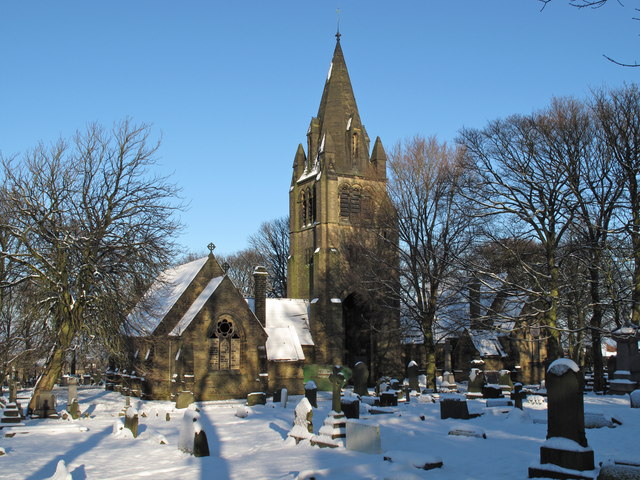
Stefan / Pudsey on Christmas Day 2009 / CC BY-SA 2.0
Unlisted, William Gay, 2009; Grade II*-listed landscape
The history of the chapels at Pudsey Cemetery can be traced back to 1872, when the Burial Board for Pudsey interviewed both William Gay of Bradford and Messrs Nelson of Fulbeck, and decided on Gay for both the laying out of the burial ground and the design of the buildings. The construction of the twin chapels, boundary walls and gates, and gatekeeper’s house was approached as a single project, estimated at a total cost of £47000 plus architect’s fees, and when it was completed in 1887, it was noted for its simple but effective design which integrated architectural and landscape planning.
The two mortuary chapels were linked in a symmetrical arrangement to a central square tower, with the easternmost structure for Anglican and the westernmost for non-conformist worshippers, as was standard practice in the nineteenth century. The tower is axial with the gated entrance and constitutes an important reference point for the cemetery landscape, informing burial patterns and processional routes and effectively dividing the cemetery in two. The eastern half of the burial ground was consecrated by the Church of England in 1875, to ensure alignment with the Anglican chapel.
It is curious to think that the cemetery is listed at Grade II* in the Historic England Register of Parks and Gardens, whilst the pair of chapels which anchor the site have no such protection. Their condition has deteriorated since they fell out of use ten years ago, and their significance will need to be recognised if they are to secure the grant funding a comprehensive restoration programme would require. The local council recently designated a new conservation area to include the chapels, which is a step in the right direction, but much more needs to be done to secure their future. The chapels are key to the setting and appearance of this historic landscape and therefore must be saved.
Status Update / March 2026
As of 2026, the chapels remain in a poor state of repair. The site has been secured with a perimeter fence, which has reduced instances of theft and vandalism, but the buildings require a more involved intervention to prevent further structural deterioration of damage to the material fabric.