
Nocton, Lincolnshire
Richard Croft / Nocton Hall / CC BY-SA 2.0
Grade II-listed, 1841, William Shearburn
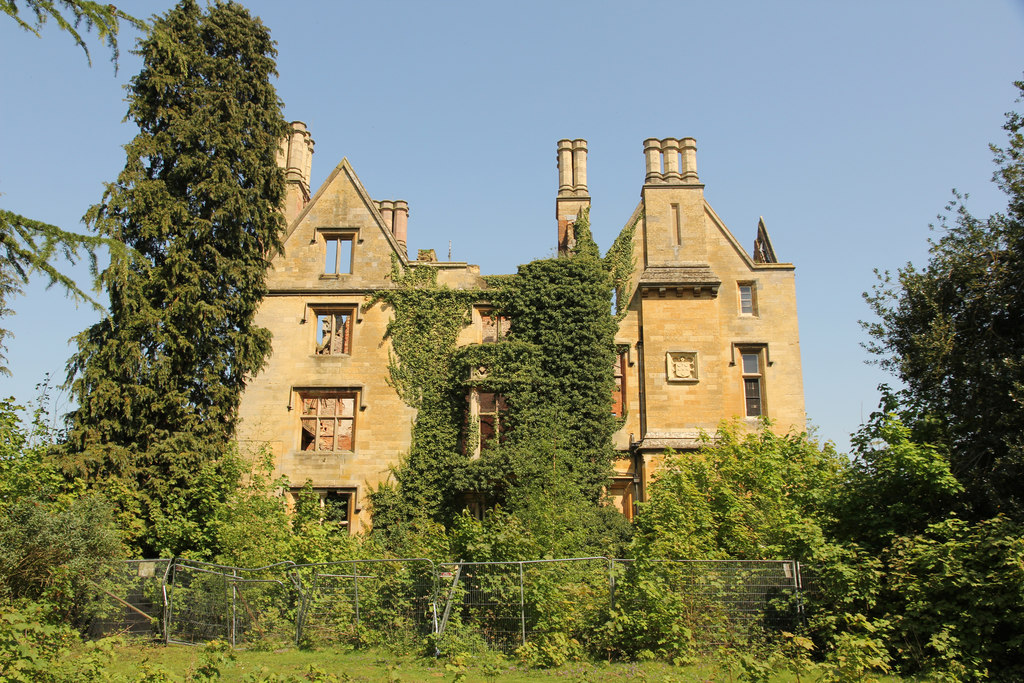
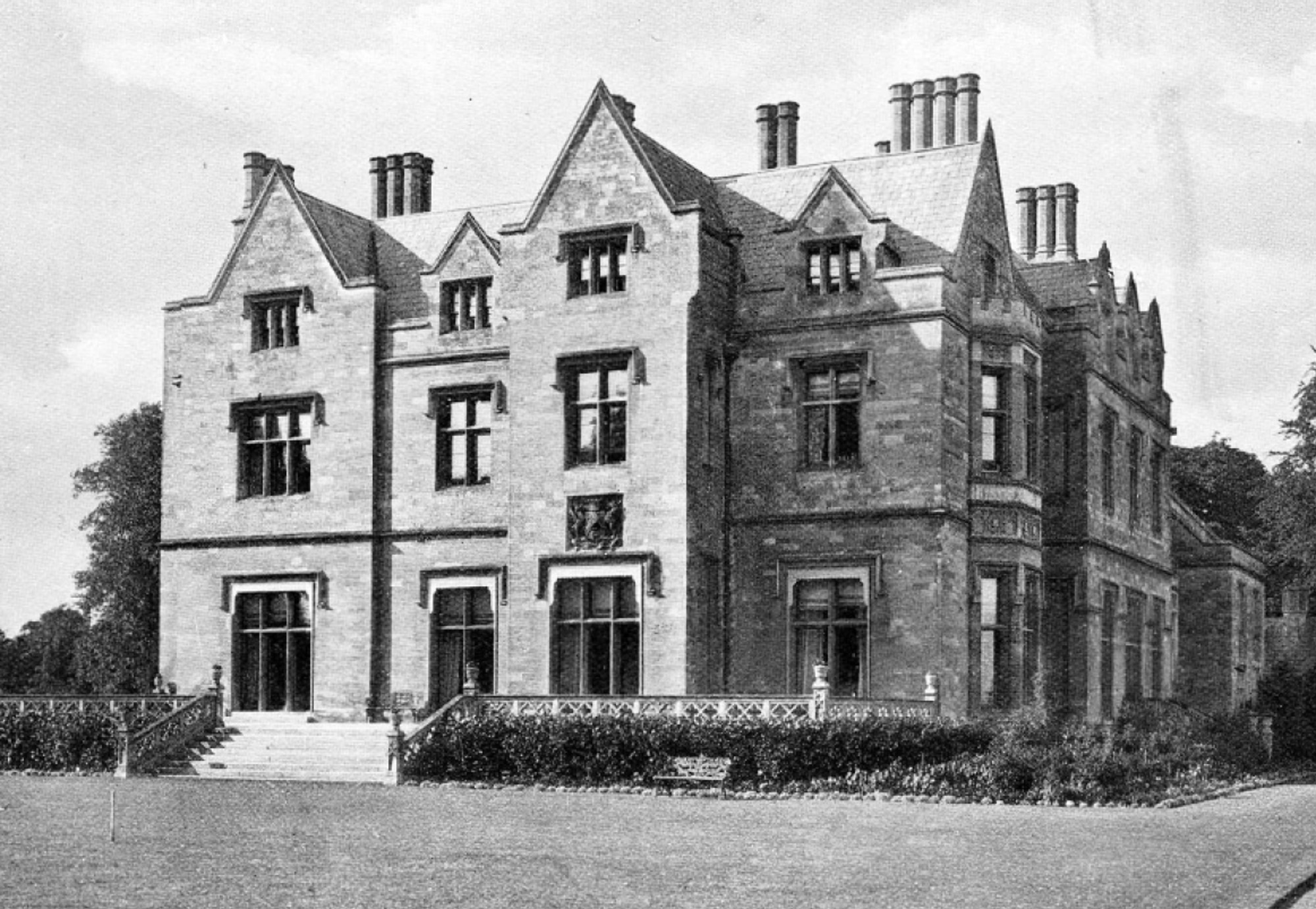
Nocton Hall was originally designed by William Sherburn of Dorking in 1841, as a private house for the Viscount Goodrich, a former Prime Minister who was created Earl of Ripon in 1833. A large house had been built on the same site by Thomas Wymbysshe in the sixteenth century, and either rebuilt or extended in the later seventeenth century – an inscription in Latin indicates that the Earl believed it was founded in 1530. However, the ground had been cleared following a fire in 1834, and Sherburn was tasked with building something that was at once respectful of the history of the estate and definitively new. It was around this time that the Earl had much of the estate village built, including the church, suggesting a shift in focus following an unusually short and chaotic parliamentary career.
The nineteenth-century house at Nocton is comprised of two storeys with attic and basement levels, and arranged across an L-shaped plan, with a service wing projecting northwards from the main block. A significant output of the Elizabethan Revival, it is distinguished by asymmetrical fenestration and detailing, and retains many exterior features, including octagonal moulded chimneystacks, mullioned and transomed windows with hood mouldings, and gables with moulded coping stones. The elevations are primarily constructed of brick and local Ancaster stone, making use of quarry from the estate where appropriate. There are interior walls with a combination of brick and stone construction, which suggests that some of the interior features were also reused, presumably from the earlier house.
Country Life, 28 September 1901, Public domain
The building was sold in 1888 and passed through a number of private owners until it was acquired by the Air Ministry in 1940 and adapted for use as a hospital and convalescence home. It retained an association with the Royal Air Force for the remainder of the twentieth century, serving the US Army Medical Branch briefly during the Second World War, until the hospital closed in the early 1990s and it was sold to a private developer. The building is understood to have remained vacant since that time, and was repeatedly targeted by vandals and thieves before a fire broke out in October 2004.
The list entry has since been amended to account for its ruinous condition, though the building remains of considerable architectural significance, both for the quality of its Elizabethan design and the condition of its intricately carved stonework, which is still of good quality. Despite appearances, the building is not entirely beyond repair, and most of the grand Victorian house could still be saved, bringing this impressive hall back into use would be a substantial undertaking. In the meantime both the owner and the local authority have a responsibility to protect it from deteriorating further.
Status Update / March 2026
As of 2026, the building remains in a derelict state. At a parish council meeting in 2023, priorities for the site were established, which included restoring the pleasure grounds and stabilising the ruins, and though no action has been taken, there are signs that the owner is preparing development plans.